Need help with booking? Send us a message.
9-Day Annapurna Base Camp Trek in Nepal is an awesome trekking package to explore the Annapurna region of Nepal. Leave your footprints at the base camp of the world’s 10th tallest mountain Mt. Annapurna. The trek to Annapurna Base Camp is not merely a walking trip rather it is the amalgamation of diverse wildlife, vegetation, and people. Therefore, exploring the place means getting to know the amazing diversity of the Annapurna region of Nepal. Roving Nepal Trek has knitted the best short trekking itinerary for travelers.
Among many trekking routes in Nepal, the Annapurna Base Camp Trek route is the most popular one. Therefore, you can share the memory of 9 Days Annapurna Base Camp Trek with your friends and family proudly. The travel planners of Roving Nepal Trek have scientifically planned out the itinerary. Therefore, doing the trek (Kathmandu to Kathmandu) in just 9 days will not be tiring.
Get all the information related to 9 Days Annapurna Base Camp Trek here.
In today’s world, it is very difficult to get longer holidays. The major reason behind the popularity of 9 Days ABC Trek is its shorter itinerary. Normally, the Annapurna Base Camp Trek lasts for 13 days. Careful planning and quality trekking crew members can help trekkers finish the trip in just 9 days. It saves money as well as time. The scenic beauty is the same. Therefore, trekkers prefer the shorter itinerary in comparison to the normal ABC Trek itinerary.
Honestly, trekking in Nepal’s trekking routes is never an easy task. It requires you to walk through valleys, uphill, downhill, and rough terrain. However, if you choose trekking as a holiday activity then you will have to expect some walking. The same applies here too. The normal walking hour per day is 7 – 8 hours. Therefore, it can become tiring but not difficult.
The travel planners of Roving Nepal Trek have knitted the itinerary in such a way that you can get enough time to rest your body. Moreover, the trekking crew members of Roving Nepal Trek are highly experienced and well-versed in the area. Once you trek with us, you will not find any kind of hassle or difficulties throughout the trip. However, expect the uphill – downhill walking!
There are a few things you need to know and a few things you need to do before 9 Days Annapurna Base Camp Trek.
· Physical Fitness
Make sure that your body is physically fit before the trek. At least, walk for about an hour daily for 15 days before the trek. You will have to walk for about 7 to 8 hours daily during the trekking. Therefore, preparing your body physically is a high priority. Perform cardio exercises regularly like cycling, walking, and running. Running in the natural environment is preferred over the treadmill running.
· Food
Don’t eat greasy food for at least a month before the trek. Eating greasy food reduces the stamina. To complete the short Annapurna Base Camp Trek, you need a healthy heart and lungs. Therefore, get your body in shape by eating carb-free foods like seafood, chicken, vegetables, fruits, etc.
· Permits
Roving Nepal Trek will arrange all the permits for the trekking. All you need to do is send copies of your Passport and a recent PP Size photograph. For the 9-day Annapurna Base Camp Trek, you need two permits. They are the Trekkers’ Information Management System (TIMS) permit and the Annapurna Conservation Area Project (ACAP) permit.
· Travel Insurance
The maximum altitude on this trek is 4130 m from sea level. This is way beyond the altitude sickness level. Usually, the altitude sickness symptoms start to appear from the place above 2500 m to 3000 m from sea level. Therefore, you need to adopt the precautionary measures. However, Nepal Government has applied the condition to do trekking in Nepal that you must get travel insurance. The insurance plan must include medical expenses, emergency rescue, and others. Make sure to share your insurance plan with the agency.
· Apparel and Gears
You don’t need heavy gear to do Annapurna Base Camp Trek. However, it depends on the season of trekking. If you are doing the trek in the winter season, you may need crampons to tie in your trekking shoes. All these gears can be purchased in Kathmandu as well. Pack warm clothes that can easily absorb the body's sweat. Waterproof jackets and trousers are of utmost necessity. Raincoat, trekking poles, and quality trekking shoes are the essentials. The Roving Nepal Trek will provide the duffle bag if you need otherwise you can get the normal 35 – 45 liters day pack bag.
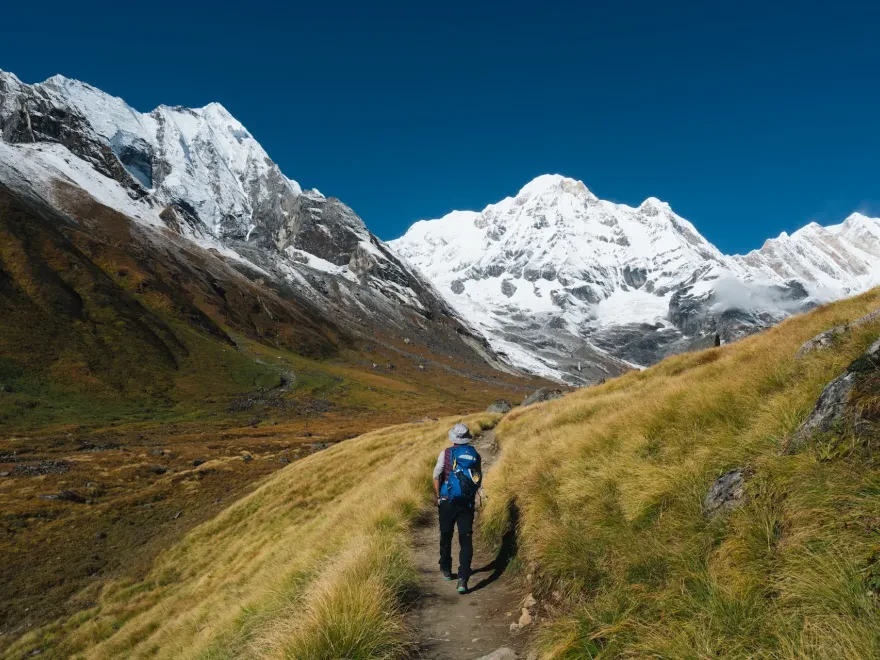
The major attraction of the Annapurna Base Camp Trek Route is the base camp of the world’s tallest mountain Mt. Annapurna. Once you are at the base camp, you will feel as if you are in the valley of snowy mountains. Yes, Annapurna Base Camp (4130 m) is at the foothills of mountains in all directions. Therefore, some people prefer to call the trek as Annapurna Sanctuary Trek. Apart from the base camp, trekkers will be able to witness both sunrise and sunset up in the Himalayas. The experience is surreal as the sun kisses the snowy mountaintop, and the view becomes mesmerizingly beautiful. That’s why thousands of trekkers trek in the trekking routes of Nepal.
Diverse villages of Magar, Gurung, Brahmins, Chhetris, Dalits, and Tibetan people of Nepal are also the attractions of the trekking route. In the 9-day Annapurna Base Camp Trek, trekkers will have a chance to encounter the people of Nepal who are culturally different. Besides villages, trekkers can also experience the diversity in vegetation. One can relish the temperate deciduous forests to alpine vegetation. Rivers, waterfalls, lakes, gorges, grassy meadows, and wildlife are bonus attractions of the trek.
Choose the 9-Day Annapurna Base Camp Trek in Nepal with Roving Nepal Trek. Expertly knitted itinerary, quality services, and experienced trekking crew members will make your trip to Nepal a momentous voyage. At an affordable rate, explore the magnificent Annapurna Region of Nepal.
Altitude Awareness: Although the itinerary is designed for gradual acclimatization, altitude sickness can affect anyone. Inform your guide immediately if you experience symptoms.
Travel Insurance: Comprehensive travel insurance covering trekking up to 4,500 meters, emergency evacuation, and medical expenses is strongly recommended.
Permits Required: The trek requires the Annapurna Conservation Area Permit (ACAP) and the TIMS Card (or the applicable trekking permit as required by current regulations).
Weather Conditions: Mountain weather changes rapidly. Flight, transportation, or itinerary adjustments may occur due to weather or trail conditions.
Packing Essentials: Bring layered clothing, waterproof gear, trekking boots, a warm sleeping bag (if required), sunglasses, sunscreen, gloves, and a headlamp.
Guide & Porter Services: Hiring experienced local guides and porters enhances safety, navigation, and supports local communities.
Responsible Trekking: Respect local culture, avoid littering, minimize plastic waste, and follow Leave No Trace principles.
Flexible Itinerary: Trekking schedules may be adjusted based on weather, trail conditions, or the health and pace of the group to ensure a safe and enjoyable experience.
Welcome to Nepal! Upon your arrival at Tribhuvan International Airport in Kathmandu, a representative from our team will greet you and transfer you to your hotel. After checking in, you can relax after your journey or explore the vibrant streets of Thamel, Kathmandu's popular tourist district filled with restaurants, cafés, trekking shops, and cultural attractions. In the evening, you'll meet your trekking guide for a detailed trip briefing. During this session, your guide will review the itinerary, check your trekking gear, discuss safety procedures, and answer any questions you may have before your adventure begins.
 Accommodation ***hotel
  Meals your self
  Max. altitude 900m / 2,953ft.
 After an early breakfast, take a scenic domestic flight from Kathmandu to Pokhara, enjoying spectacular aerial views of the Himalayan range. Upon arrival, continue with a scenic drive to Jhinu Danda, the starting point of your trek. The drive passes through beautiful hills, traditional villages, and terraced farmlands.
From Jhinu Danda, begin trekking by crossing a suspension bridge over the Modi Khola before ascending a series of stone staircases through lush forests toward Chhomrong, one of the largest Gurung villages in the Annapurna region. The village offers magnificent views of Annapurna South, Hiunchuli, and Machhapuchhre (Fishtail).
Walking Distance: Approximately 5–6 km
Trekking Duration: 3–4 hours
Accommodation: Teahouse
Meals: Breakfast, Lunch & Dinner
Accommodation Normal Meals As per menu Max. altitude 2,150m / 7,054ft. After breakfast, descend several hundred stone steps to cross the Chhomrong Khola before climbing through dense rhododendron, bamboo, and oak forests toward Sinuwa. The trail continues through peaceful woodlands filled with birds and occasional wildlife before reaching Bamboo for lunch.
In the afternoon, continue gradually uphill through beautiful bamboo forests alongside the Modi Khola until arriving at Dovan. The peaceful surroundings and fresh mountain air provide an excellent opportunity to relax and prepare for the higher elevations ahead.
Walking Distance: Approximately 11 km
Trekking Duration: 6–7 hours
Accommodation: Teahouse
Meals: Breakfast, Lunch & Dinner
Accommodation tea house Meals As per menu Max. altitude 2,500m / 8,202ft. Today's trek follows the Modi Khola through dense forests that gradually transition into alpine vegetation. As you gain altitude, the valley narrows and the scenery becomes increasingly dramatic with towering cliffs and cascading waterfalls.
Pass through the settlements of Himalaya and Hinku Cave before reaching Deurali, a small mountain village surrounded by spectacular Himalayan peaks. The landscape becomes more rugged as you enter the Annapurna Sanctuary, offering increasingly impressive views of snow-covered mountains.
Because of the higher elevation, it is important to maintain a slow and steady pace while staying well hydrated.
Walking Distance: Approximately 9 km
Trekking Duration: 5–6 hours
Accommodation: Teahouse
Meals: Breakfast, Lunch & Dinner
Accommodation Tea house Meals As per menu Max. altitude 3,200m / 10,499ft. Today is the highlight of the trek. Leave Deurali early and continue through the narrow valley toward Machhapuchhre Base Camp (3,700 m). As the forest disappears, the landscape opens into the spectacular Annapurna Sanctuary, surrounded by some of the highest mountains in the world.
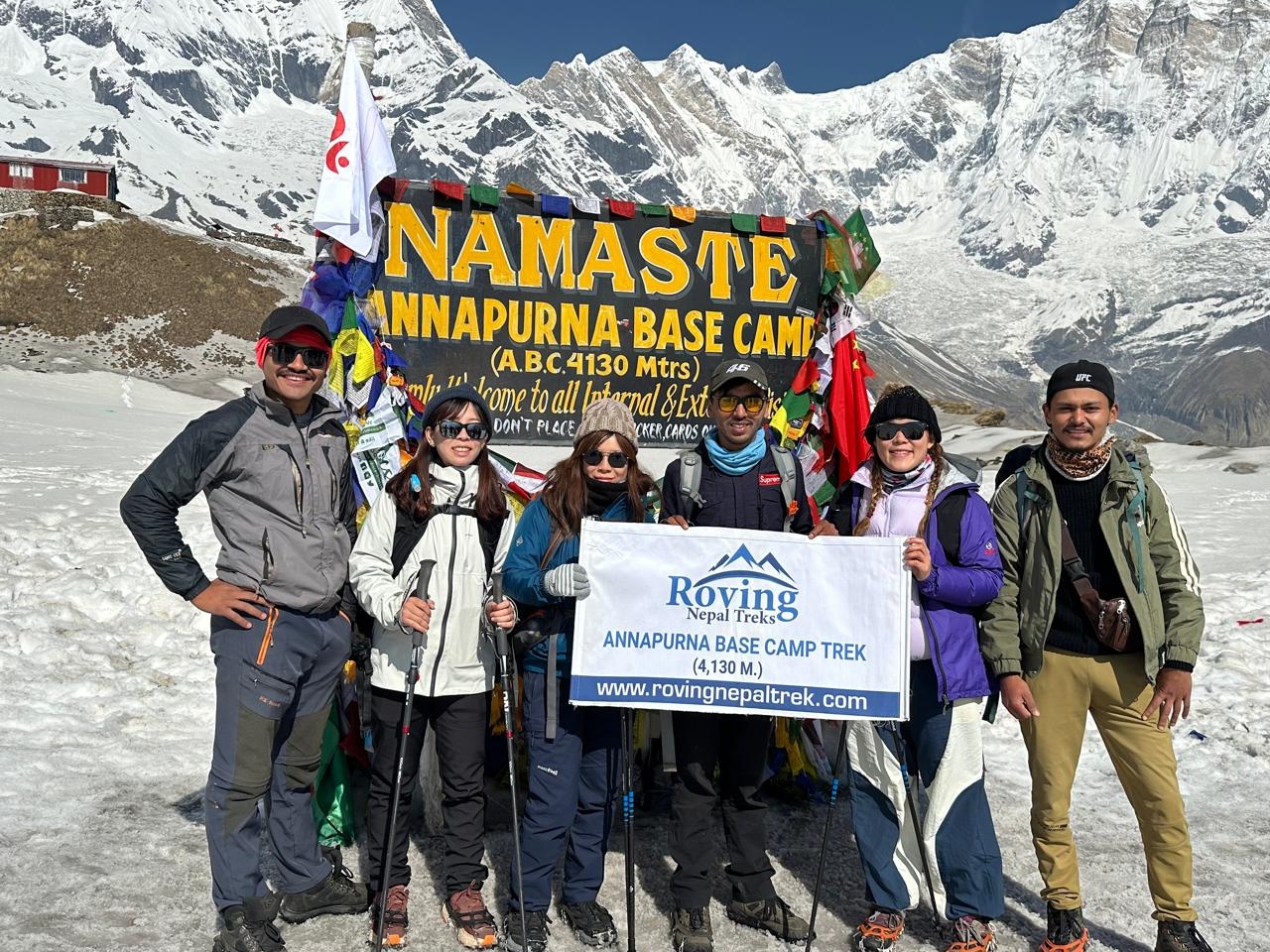
After a short rest at Machhapuchhre Base Camp, continue gradually to Annapurna Base Camp. Upon arrival, you'll be rewarded with breathtaking 360-degree panoramic views of Annapurna I (8,091 m), Annapurna South, Hiunchuli, Gangapurna, Tent Peak, and Machhapuchhre.
Spend time exploring the base camp, taking photographs, and enjoying one of Nepal's most iconic mountain landscapes. Witnessing sunset or sunrise over the Annapurna massif is truly unforgettable.
Walking Distance: Approximately 10 km
Trekking Duration: 5–6 hours
Accommodation: Teahouse at Annapurna Base Camp
Meals: Breakfast, Lunch & Dinner
Accommodation Tea house Meals As per menu Max. altitude 4,130m / 13,550ft. Wake up early to witness a spectacular Himalayan sunrise illuminating the snow-covered peaks surrounding Annapurna Base Camp. After breakfast, begin descending along the same trail through Machhapuchhre Base Camp, Deurali, Himalaya, Dovan, and Bamboo.
Descending allows you to appreciate the scenery from a different perspective while breathing the increasingly oxygen-rich air. Continue through lush forests until reaching Sinuwa, where you'll spend the night surrounded by peaceful mountain forests.
Walking Distance: Approximately 18 km
Trekking Duration: 7–8 hours
Accommodation: Teahouse
Meals: Breakfast, Lunch & Dinner
Accommodation Tea house Meals As per menu Max. altitude 2,340m / 7,677ft. After breakfast, continue descending through Chhomrong before following the trail down to Jhinu Danda. If time permits, you may visit the famous natural hot springs located beside the Modi Khola, where many trekkers enjoy soaking tired muscles after several days of hiking.
After lunch, board your private vehicle or shared jeep for the scenic drive back to Pokhara. Upon arrival, check into your hotel and enjoy a relaxing evening beside Phewa Lake. Celebrate the successful completion of your Annapurna Base Camp adventure with your trekking team.
Walking Distance: Approximately 9 km
Trekking Duration: 4–5 hours
Drive Duration: 2–3 hours
Accommodation: Hotel in Pokhara
Meals: Breakfast & Lunch
Accommodation ***hotel Meals your self Max. altitude 822m / 2,697ft. Following breakfast, begin the scenic drive back to Kathmandu along the Prithvi Highway. The journey follows the Trishuli River through picturesque hills, terraced farmland, and traditional Nepalese villages, providing one final opportunity to admire Nepal's beautiful countryside.
Upon arrival in Kathmandu, check into your hotel. The remainder of the day is free for shopping, sightseeing, or relaxing. You may wish to purchase souvenirs, explore local markets, or enjoy a traditional Nepali farewell dinner.
Drive Duration: Approximately 7–8 hours
Accommodation: Hotel in Kathmandu
Meals: Breakfast
Accommodation ***hotel Meals your self Max. altitude 900m / 2,953ft. Your unforgettable 9 Days Annapurna Base Camp Trek comes to an end today. Depending on your international flight schedule, enjoy some free time before our representative transfers you to Tribhuvan International Airport for your departure.
Leave Nepal with incredible memories of the Annapurna Himalayas, welcoming mountain communities, and one of the world's most rewarding trekking experiences. We hope to welcome you back for another Himalayan adventure in the future.
Best Seasons: The ideal trekking months are March–May and September–November, offering clear mountain views and pleasant weather.
Maximum Altitude: The trek reaches Annapurna Base Camp (4,130 m / 13,550 ft), where the air is thinner and temperatures are colder.
Fitness Level: A moderate level of fitness is recommended. Expect to walk 5–7 hours daily on varied terrain.
Accommodation: Comfortable teahouses are available throughout the trek, offering basic rooms with shared facilities at most locations.
Meals: Local and international dishes are available along the route, including Dal Bhat, noodles, fried rice, soups, and pancakes.
Electricity & Charging: Charging facilities are available at most teahouses, but additional fees may apply at higher elevations.
Internet & Mobile Network: Wi-Fi and mobile signals are available in many villages but become less reliable as you gain altitude.
Drinking Water: Safe drinking water is available through filtered, boiled, or purified sources. Bringing a reusable water bottle and purification tablets is recommended.
Hot Showers: Most teahouses offer hot showers for an additional charge, especially at higher elevations.
Cash Required: There are no ATMs on the trekking route. Carry sufficient Nepalese Rupees for personal expenses.
· All arrival and departure transportation from the airport to a hotel and vice versa
· 2 night 3*** (Three Star Category) Hotel in Kathmandu and at Pokhara on a Bed / Breakfast basis.
· One Night 3*** Hotel in pokhara with Breakfast
· All applicable trekking permits TIMS (Trekking Information Management Systems) including ACAP fees (Annapurna Conservation Area Project).
· One way flight from Kathmandu to pokhara with airport tax
· Deluxe Tourist Bus for the overland journey From Pokhara back to Kathmandu
· Full board on trekking staying in the best available lodge includes breakfast, lunch, and dinner with afternoon refreshment tea/coffee.
· Service of guide, and porters includes daily wages, meals, accommodation, transportation allowance, and medical insurance only for field staff/porter.
· Roving Nepal Trek t-shirts, double bag, trekking Map
· Down jacket and sleeping Bag while using mountain
· Trek Completion Certificate
· Welcome or farewell group dinner, with a briefing regarding the treks.
· Comprehensive medical kit carried by our guide throughout the trek.
· Local transportation in Pokhara before and after the trek.
· Nepal Visa, Medical / Travel Insurance.
· Meals in Kathmandu / Pokhara, expenses of personal nature like laundry etc.
· Emergency Evacuation if required by any means of transportation and Helicopter Service.
· Personal trek gear, sleeping bags, duvet / down jackets, kit / duffel bags.
· Extra snacks and other refreshment, including drinking water at own expenses.
· Domestic air fare Kathmandu / Pokhara / Kathmandu if not included in the itinerary and trip cost at extra cost.
· Early return from the trek due to personal reason or sickness, the client have to bear extra expenses oneself. (To be claimed from your insurance).
· Personal Medical Kit, as per your doctor advice.
Down jacket and sleeping bag (if needed)
Heavy-duty, waterproof duffel bag
Company t-shirt
Trekking map
Certificate of Achievement
Your Start Date is the day you land in Nepal, and your End Date is when you fly home.
If the set 9 Days Annapurna Base Camp group dates don’t suit your schedule, we can offer alternative dates upon request.
Bring layered clothing, waterproof gear, trekking boots, a warm sleeping bag (if required), sunglasses, sunscreen, gloves, and a headlamp.
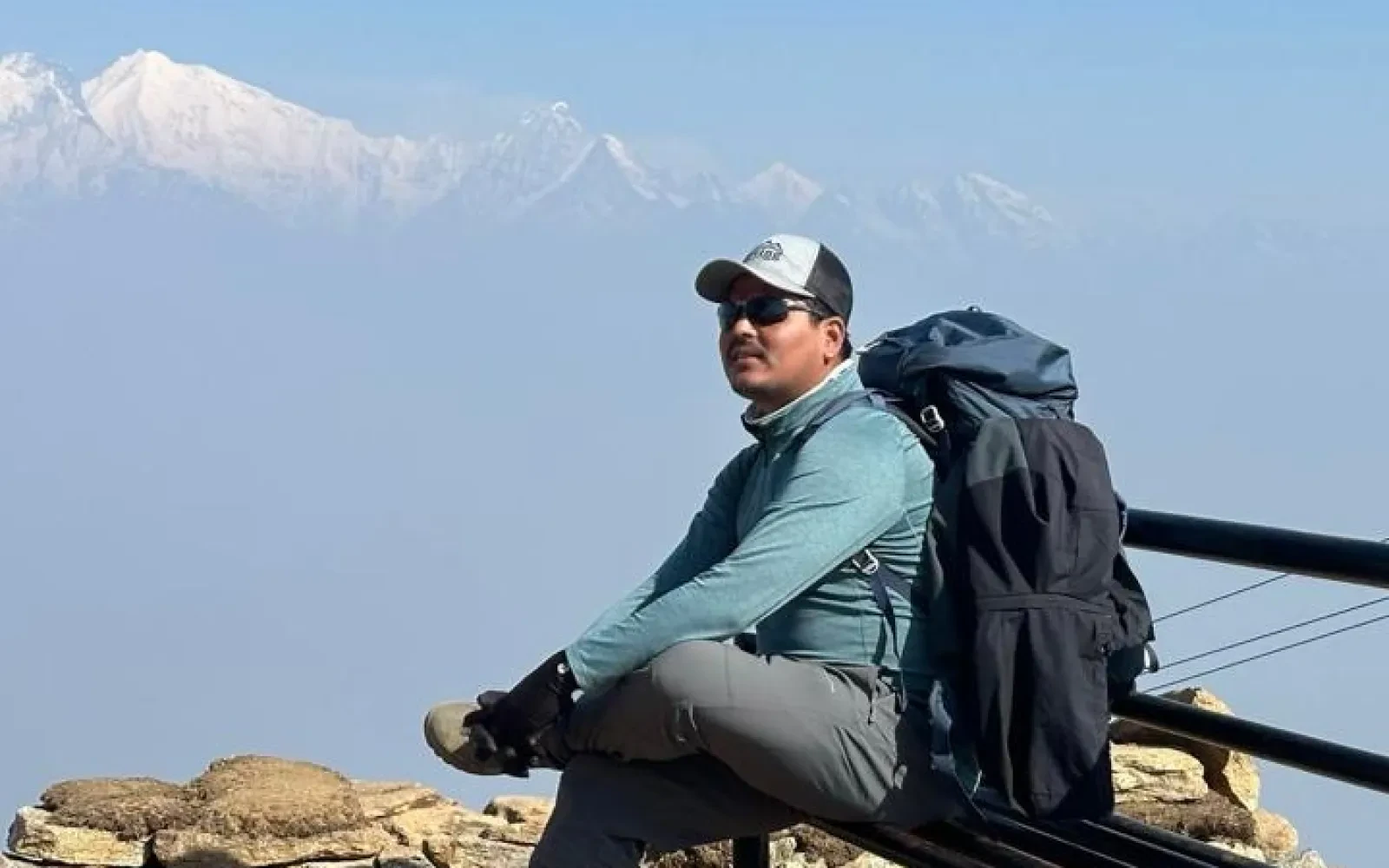
A very memorable and exceptional experience on my trek to Annapurna Base Camp. Bishnu, our guide and Roving Nepal Trek was very kind, experienced and patient! He was very knowledgeable of the route and the region, answered our constant queries, supported any concerns, accommodated any dietary concerns and some unforeseen changes, when required and ensured we were comfortable with the pace or during our overnight stay. Moreover, he kept pace and was always there with us whether we were fast or slow. He has a good sense of humor, ever smiling and friendly. Most importantly he will make sure for your safety.
The 9 Days Annapurna Base Camp Trek is one of Nepal's most popular Himalayan adventures, taking trekkers into the heart of the Annapurna Sanctuary. The journey begins from Nayapul or Jhinu Danda (depending on the itinerary) and passes through picturesque Gurung and Magar villages, dense rhododendron forests, bamboo groves, and alpine landscapes before reaching Annapurna Base Camp at an elevation of 4,130 meters (13,550 feet). The trek covers approximately 90–110 kilometers (56–68 miles) over nine days, depending on the exact route. It offers spectacular views of Annapurna I (8,091 m), Machhapuchhre (6,993 m), Hiunchuli (6,441 m), and Annapurna South (7,219 m). Unlike high-altitude expeditions, no technical climbing skills are required, making it accessible to most trekkers with moderate fitness.
The Annapurna Base Camp Trek is generally rated as moderately challenging. Trekkers usually hike between 5 and 7 hours daily, covering 10 to 18 kilometers each day over a mix of stone staircases, forest trails, suspension bridges, and gradual mountain paths. While the trek does not require mountaineering experience, the continuous ascents and descents can be physically demanding. The highest point, Annapurna Base Camp at 4,130 meters, has lower oxygen levels than sea level, making the trek more demanding. People who regularly walk, hike, jog, or exercise before the trip generally find the trek enjoyable. Proper pacing and adequate rest are key to completing the journey comfortably.
The highest elevation reached during the trek is Annapurna Base Camp (4,130 meters / 13,550 feet). At this altitude, oxygen levels are roughly 60% of those at sea level, which means some trekkers may experience symptoms of Acute Mountain Sickness (AMS). Common symptoms include headache, nausea, dizziness, loss of appetite, and fatigue. Fortunately, the standard 9-day itinerary includes gradual elevation gain, helping the body acclimatize naturally. Staying well hydrated, avoiding alcohol, eating nutritious meals, and trekking at a steady pace all reduce the risk of altitude sickness. Experienced guides monitor trekkers carefully and are trained to recognize early symptoms, ensuring appropriate action is taken if necessary.
Yes. The 9 Days Annapurna Base Camp Trek is widely regarded as one of the best Himalayan treks for beginners who are reasonably fit. Since the trail is well established and features numerous teahouses, trekkers do not need camping equipment or technical climbing experience. Beginners should be prepared for several consecutive days of hiking, including long sections of uphill stone steps. A training routine involving walking, stair climbing, cycling, or light cardio for 4 to 6 weeks before the trek can greatly improve endurance. With the support of experienced guides, proper acclimatization, and realistic expectations, many first-time trekkers successfully complete this iconic Himalayan adventure.
The Annapurna Base Camp Trek is popular because it combines diverse scenery, rich culture, and spectacular mountain views within a relatively short itinerary. In just nine days, trekkers experience lush subtropical forests, traditional Gurung villages, waterfalls, rivers, alpine meadows, and the breathtaking Annapurna Sanctuary. The trek offers close-up views of several Himalayan peaks, including Annapurna I (8,091 m), the 10th-highest mountain in the world. Unlike many remote trekking routes, the Annapurna region has well-developed teahouse accommodations, making logistics simple and comfortable. This balance of accessibility, cultural experiences, moderate difficulty, and world-class scenery makes it one of the most visited trekking destinations in Nepal.
Preparing for the Annapurna Base Camp Trek at least 4 to 8 weeks before departure will greatly improve your trekking experience. Since you'll be walking 5 to 7 hours daily over steep ascents, descents, and thousands of stone steps, focus on building cardiovascular endurance and leg strength. Activities such as hiking, jogging, cycling, swimming, and stair climbing are excellent training options. Aim for 30 to 60 minutes of exercise, four to five times a week. Strengthening your core and lower body can also help reduce fatigue and improve balance on uneven trails. If possible, practice hiking with a backpack weighing 5 to 8 kg to simulate actual trekking conditions. Good preparation helps minimize muscle soreness, reduces the risk of injury, and makes the trek more enjoyable.
Layering is the most effective clothing strategy for the Annapurna Base Camp Trek because temperatures vary significantly with altitude. During the trek, daytime temperatures at lower elevations can range from 15°C to 25°C, while mornings and nights at Annapurna Base Camp may drop to -5°C or lower, especially in winter. Pack moisture-wicking base layers, an insulating fleece jacket, a warm down jacket, waterproof outerwear, trekking pants, thermal underwear, gloves, a warm hat, hiking socks, and comfortable trekking boots. Lightweight clothing is suitable for lower elevations, while warmer layers are essential for higher altitudes. Choosing breathable, quick-drying fabrics instead of cotton helps regulate body temperature and keeps you comfortable throughout the trek.
Besides proper clothing, several pieces of trekking equipment are essential for a comfortable journey. A 20 to 30-liter daypack is ideal for carrying water, snacks, extra clothing, and personal items during daily hikes. Trekking poles reduce strain on your knees, especially during long descents and steep staircases. Other important items include a reusable water bottle or hydration bladder, sunglasses with UV protection, sunscreen (SPF 30 or higher), lip balm, a headlamp with spare batteries, power bank, rain cover, basic first-aid kit, and personal medications. Many trekkers also bring gaiters during the winter season and lightweight microspikes if snow is expected. Carrying the right gear helps improve comfort, safety, and overall trekking performance.
Although teahouses provide beds, blankets, and pillows, bringing a quality sleeping bag is highly recommended, especially during autumn, winter, and early spring. At higher elevations, nighttime temperatures often fall below 0°C, and rooms are generally not heated. A sleeping bag rated for approximately -10°C to -15°C provides extra warmth and improves sleeping comfort. Many trekking companies also offer sleeping bags for rent if you prefer not to carry your own. Even if additional blankets are available, a sleeping bag provides better insulation and hygiene, making it one of the most valuable items for high-altitude trekking in Nepal.
Yes. Kathmandu and Pokhara have numerous trekking shops where visitors can rent or purchase most trekking equipment at affordable prices. Popular rental items include down jackets, sleeping bags, trekking poles, crampons (during winter), backpacks, and duffel bags. Renting equipment is an excellent option for travelers who trek occasionally and want to avoid airline baggage fees. However, personal items such as trekking boots, socks, thermal clothing, and base layers should ideally be brought from home to ensure proper fit and comfort. Renting quality gear allows trekkers to travel lighter while still having access to reliable equipment suitable for Himalayan conditions.
Accommodation on the 9 Days Annapurna Base Camp Trek is primarily in traditional teahouses, which are family-run mountain lodges offering simple but comfortable facilities. Most rooms are twin-sharing with two single beds, mattresses, pillows, and blankets. Bathrooms are often shared, although a few villages at lower elevations offer attached bathrooms. As you ascend, accommodation becomes more basic due to the remote mountain environment. Dining halls are heated with a central stove during the evenings, providing a warm place to relax and socialize. While luxury accommodations are not available along the higher sections of the trail, teahouses provide everything necessary for a safe and enjoyable trekking experience. Booking with a trekking company also helps secure accommodation during the busy spring and autumn trekking seasons.
Teahouses along the Annapurna Base Camp route serve a surprisingly wide variety of freshly prepared meals. The most popular dish is Dal Bhat, Nepal's traditional meal consisting of rice, lentil soup, vegetables, pickles, and seasonal curry, often with unlimited rice refills. Other menu options include fried rice, noodles, pasta, pizza, momos, soups, pancakes, eggs, potatoes, sandwiches, porridge, and Tibetan bread. Breakfast usually includes tea or coffee alongside eggs, toast, porridge, or pancakes. As supplies are transported by porters or mules, menu prices increase with altitude. Eating carbohydrate-rich meals helps maintain energy during long trekking days and supports better acclimatization at higher elevations.
Safe drinking water is available throughout the Annapurna Base Camp Trek, but trekkers should avoid drinking untreated tap or stream water. Most teahouses sell boiled or filtered drinking water, while refill stations are available in several villages to encourage sustainable trekking. Carrying a reusable water bottle or hydration bladder with a capacity of 1 to 2 liters is highly recommended. Many trekkers also bring water purification tablets, UV purifiers, or portable water filters for additional convenience and safety. Staying hydrated is especially important at higher elevations, where dry air and physical exertion increase fluid loss. Drinking 3 to 4 liters of water per day can help reduce fatigue and lower the risk of altitude-related illnesses.
Yes. Most teahouses along the Annapurna Base Camp route can accommodate vegetarian diets, and many also offer vegan-friendly options. Vegetarian meals are often recommended because meat becomes less fresh as altitude increases due to limited refrigeration and transportation. Common vegetarian dishes include Dal Bhat, vegetable fried rice, noodle soup, vegetable curry, pasta, potatoes, chapati, and seasonal vegetables. Vegan travelers should inform their guide in advance so suitable meal arrangements can be made whenever possible. Those with food allergies or medical dietary requirements should also communicate their needs before the trek begins, allowing guides and lodge owners to prepare appropriate alternatives throughout the journey.
Most villages along the Annapurna Base Camp Trek offer basic modern facilities, including electricity, Wi-Fi, and hot showers. However, these services usually require an additional fee, especially at higher elevations where electricity is generated by solar power or small hydroelectric systems. Charging electronic devices typically costs between NPR 200 and NPR 500, depending on the location, while hot showers may also incur a separate charge. Wi-Fi is available in many teahouses but becomes slower and less reliable as you approach Annapurna Base Camp. Carrying a power bank and keeping electronic devices fully charged before leaving lower villages is highly recommended.
The two best trekking seasons are spring (March to May) and autumn (September to November). Spring offers mild temperatures, blooming rhododendron forests, and vibrant landscapes, while autumn provides crystal-clear mountain views following the monsoon rains. Daytime temperatures at lower elevations generally range between 15°C and 25°C, whereas Annapurna Base Camp experiences temperatures between -5°C and 10°C, depending on the season. These months also offer the most stable weather, making them ideal for photography and mountain scenery. Because they are peak trekking seasons, accommodations fill quickly, so early booking is recommended.
Yes, the trek remains open during winter, typically from December to February, and offers a quieter trekking experience with fewer visitors. Snow-covered mountains create spectacular scenery, and the trails are generally less crowded than during spring or autumn. However, temperatures at Annapurna Base Camp often fall below -10°C at night, and heavy snowfall can occasionally block higher sections of the trail. Proper winter clothing, insulated sleeping bags, waterproof boots, and flexible itineraries are essential. Trekking with an experienced guide is highly recommended during winter because weather conditions can change rapidly in the Himalayas.
Yes, but trekking during the monsoon season (June to August) presents additional challenges. Heavy rainfall can make trails muddy and slippery while increasing the possibility of landslides in certain sections. Mountain views are often obscured by clouds, and leeches are common in forested areas below approximately 2,500 meters. On the positive side, the forests become incredibly lush and green, waterfalls are at their most impressive, and there are far fewer trekkers on the trail. Those trekking during the monsoon should carry waterproof clothing, backpack rain covers, quick-drying garments, and extra caution while walking on wet trails.
Temperatures vary greatly depending on the season and altitude. During spring and autumn, daytime temperatures at Annapurna Base Camp generally range from 5°C to 10°C, while nighttime temperatures often drop to around -5°C. In winter, nighttime temperatures can fall below -10°C, particularly during clear weather. Lower villages remain considerably warmer, often reaching 20°C or more during the day. These significant temperature differences make layering essential. Packing thermal clothing, insulated jackets, gloves, hats, and quality sleeping bags ensures comfort throughout the trek regardless of the season.
Mountain weather is naturally unpredictable, and conditions can change within a few hours. Heavy rain, snowfall, dense fog, or landslides may occasionally require adjustments to the itinerary for safety reasons. Guides monitor local weather conditions and trail reports daily to determine the safest route and pace for the group. While the standard itinerary is designed to be completed in nine days, flexibility is important in the Himalayas. Allowing one or two extra days in your overall Nepal travel plans is advisable in case transportation delays or weather-related schedule changes occur.
Yes. Current trekking regulations in Nepal require most foreign trekkers to be accompanied by a licensed trekking guide when trekking in many regions, including the Annapurna area. A professional guide provides navigation, manages permits, arranges accommodation, monitors weather conditions, and assists with altitude awareness and emergencies. Guides are also knowledgeable about local culture, traditions, wildlife, and mountain history, making the experience much richer. In addition to improving safety, hiring a licensed guide supports local employment and contributes to sustainable tourism within Nepal's mountain communities.
A porter carries the majority of your trekking gear, allowing you to hike comfortably with only a small daypack. Typically, one porter carries up to 20–25 kg, which is often shared between two trekkers, meaning each trekker contributes approximately 10–12 kg of luggage. Hiring a porter significantly reduces physical strain, especially on steep staircases and long ascents. It also creates valuable employment opportunities for local residents. Many trekkers find that using a porter allows them to enjoy the scenery more while conserving energy for the higher sections of the trek.
Safety is a top priority on the Annapurna Base Camp Trek. Professional guides monitor trekkers for signs of altitude sickness, weather-related risks, dehydration, and fatigue throughout the journey. Most guides carry a comprehensive first-aid kit and maintain communication with trekking agencies when network coverage is available. If a medical emergency occurs, helicopter evacuation can be arranged for severe cases, provided the trekker has appropriate travel insurance. Daily trekking distances are carefully planned to allow gradual altitude gain and sufficient rest, reducing the likelihood of altitude-related illnesses and ensuring a safer trekking experience.
Comprehensive travel insurance is strongly recommended for every trekker visiting Annapurna Base Camp. Your policy should specifically cover trekking activities up to at least 4,500 meters, emergency helicopter evacuation, medical treatment, hospitalization, trip cancellation, and personal belongings. Medical evacuation from remote Himalayan regions can cost several thousand US dollars, making insurance an essential part of your travel planning. Before traveling, carefully review your policy to ensure trekking at high altitude is included, as some standard travel insurance plans exclude mountain activities above certain elevations.
The most effective way to reduce the risk of altitude sickness is to ascend gradually, stay well hydrated, and avoid rushing the trek. Drinking 3 to 4 liters of water daily, eating nutritious meals, sleeping well, and avoiding alcohol or smoking at higher elevations all contribute to better acclimatization. Trekking slowly allows your body to adapt naturally to decreasing oxygen levels. If you develop symptoms such as persistent headache, dizziness, nausea, or unusual fatigue, inform your guide immediately. Early recognition and proper response are the safest ways to prevent more serious altitude-related illnesses.
To trek in the Annapurna region, travelers must obtain the necessary permits required by the Government of Nepal. The primary permit is the Annapurna Conservation Area Permit (ACAP), while additional trekking permit requirements depend on the latest regulations in effect at the time of travel. Your trekking company usually arranges all required permits before departure. Trekkers should carry a valid passport and any necessary photographs or documentation. Permit checkpoints are located throughout the trekking route, and officials may inspect them several times during the journey.
While most trekking packages cover the main expenses, trekkers should budget for personal purchases not included in the itinerary. Common additional costs include bottled drinks, snacks, desserts, alcoholic beverages, hot showers, Wi-Fi access, charging electronic devices, laundry services, tips for guides and porters, and souvenirs. Depending on personal spending habits, many trekkers budget approximately USD 10–25 per day for these incidental expenses. Carrying sufficient Nepalese Rupees in cash is essential because ATMs are not available along the trekking route, and most teahouses do not accept credit cards.