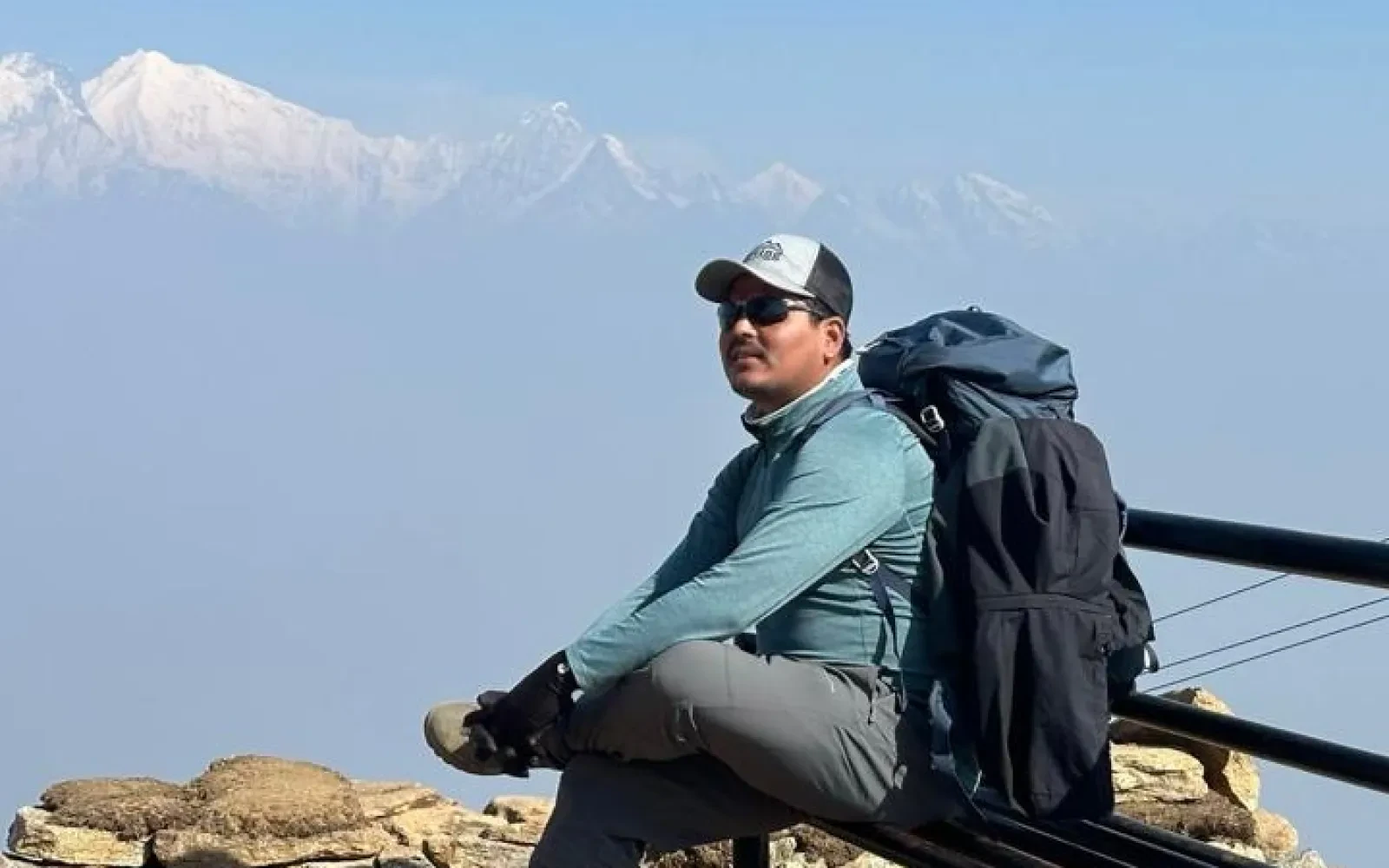
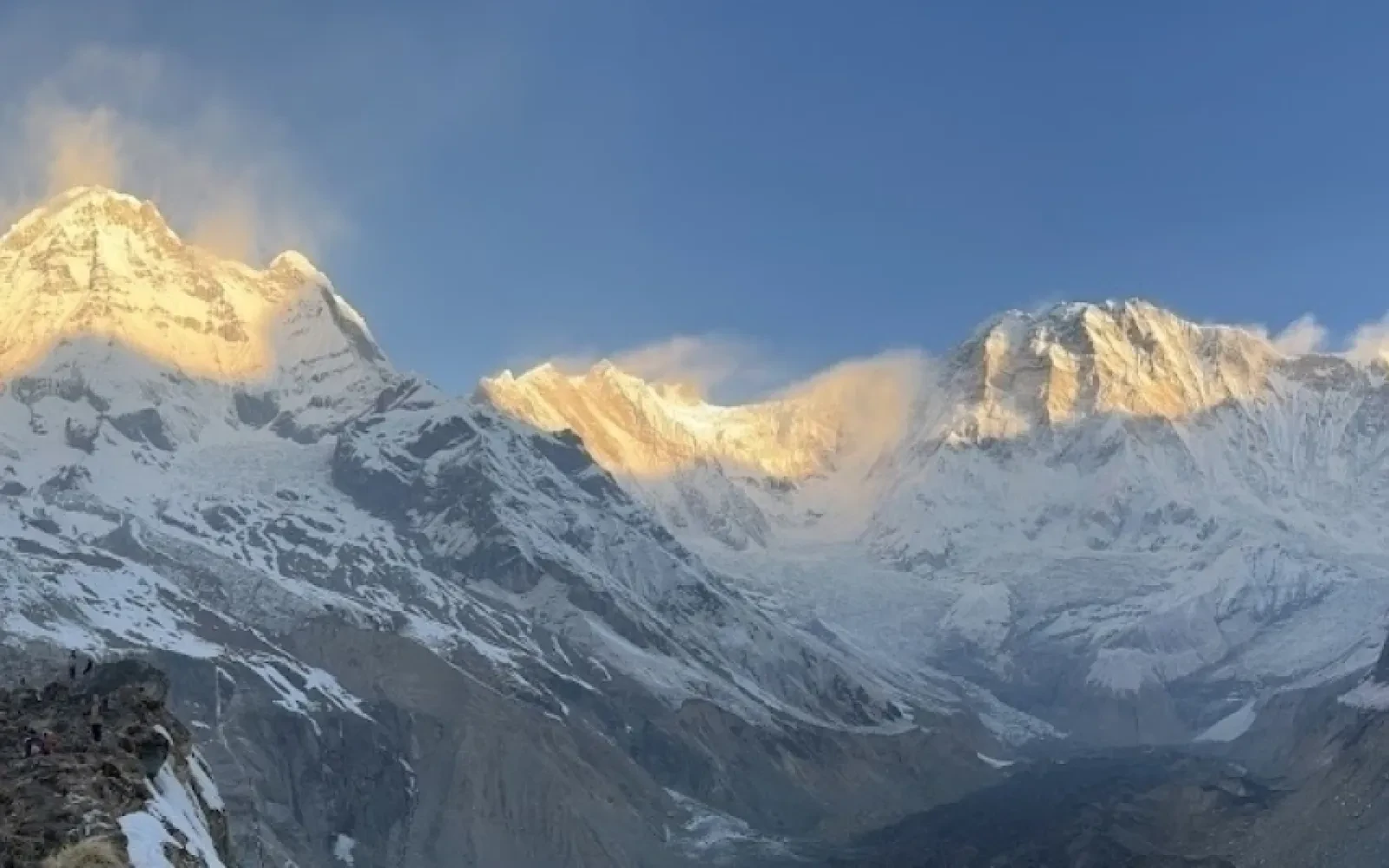
The Annapurna Region of Nepal is the most diversified and alluring trekking destination. It has a plethora of natural wonders and cultural grandeur. The region holds numerous superlatives from the walking trails to the touristic sightseeing vantage points. Roving Nepal Trek has handpicked trails that are very popular and also full of amazing attractions both natural and cultural.
Major trekking trails of the Annapurna region of Nepal are Annapurna Circuit Trek, Annapurna Base Camp Trek, Ghorepani Poon Hill Trek,and Mardi Himal Trek.The company has sent various travel planners, trekking guides, and correspondents for updated information on the trails before knitting the itineraries.
Annapurna Base Camp Trek which takes trekkers to the lower region of this present world's tenth tallest mountain Mt. Annapurna (8091 m) is the most productive trekking course in Nepal. Annapurna Region Trekking comprises contrasting trails from simple reviewed to strenuous. The general population of all ages or diverse motivations behind voyaging could navigate these trails. Ghorepani Poon Hill Trek broadly known as Annapurna View Trek too is a short trekking in Nepal course utilized by numerous individuals over the globe. This trail offers a radiant open door for trekkers to observe the sun ascending from the skyline lighting the slopes, woodlands, and grand mountain crests. Annapurna Circuit Trek is another trekking course of the locale as it crosses through high passes like Thorong La Pass, mild woods, snow-capped backwoods, Himalayan desolate desert, and a lot more appealing spots of Nepal. Jomsom Muktinath Trek has topics of serenity and style. Mardi Himal Trek blesses off the beaten inclination while the Khopra Hill Trek course gives legitimate immaculate rustic uneven Nepal.
From short trekking occasions in Nepal to long trekking alternate routes, Annapurna Region Trekking blesses brilliant minutes. Make the earth-shattering story of going through woodlands, caverns, cascades, mountains, slopes, and towns by picking any of the bundles inside this enhanced trekking goal.
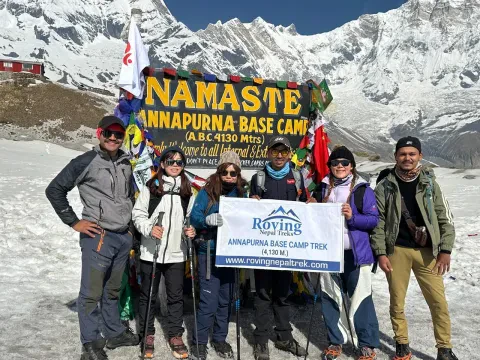
9-Day Annapurna Base Camp Trek in Nepal is an awesome trekking package to explore the Annapurna region of Nepal. Leave your footprints at the base camp of the world’s 10th tallest mountain Mt. Annapurna. The trek to Annapurna Base Camp is not merely a walking trip rather it is the amalgamation of diverse wildlife, vegetation, and people. Therefore, exploring the place means getting to know the amazing diversity of the Annapurna region of Nepal. Roving Nepal Trek has knitted the best short trekking itinerary for travelers.Among many trekking routes in Nepal, the Annapurna Base Camp Trek route is the most popular one. Therefore, you can share the memory of 9 Days Annapurna Base Camp Trek with your friends and family proudly. The travel planners of Roving Nepal Trek have scientifically planned out the itinerary. Therefore, doing the trek (Kathmandu to Kathmandu) in just 9 days will not be tiring.Get all the information related to 9 Days Annapurna Base Camp Trek here.Why the 9-Day Annapurna Base Camp Trek is popular nowadays?In today’s world, it is very difficult to get longer holidays. The major reason behind the popularity of 9 Days ABC Trek is its shorter itinerary. Normally, the Annapurna Base Camp Trek lasts for 13 days. Careful planning and quality trekking crew members can help trekkers finish the trip in just 9 days. It saves money as well as time. The scenic beauty is the same. Therefore, trekkers prefer the shorter itinerary in comparison to the normal ABC Trek itinerary.Is it difficult to complete Annapurna Base Camp Trek in 9 days?Honestly, trekking in Nepal’s trekking routes is never an easy task. It requires you to walk through valleys, uphill, downhill, and rough terrain. However, if you choose trekking as a holiday activity then you will have to expect some walking. The same applies here too. The normal walking hour per day is 7 – 8 hours. Therefore, it can become tiring but not difficult.The travel planners of Roving Nepal Trek have knitted the itinerary in such a way that you can get enough time to rest your body. Moreover, the trekking crew members of Roving Nepal Trek are highly experienced and well-versed in the area. Once you trek with us, you will not find any kind of hassle or difficulties throughout the trip. However, expect the uphill – downhill walking!Things to know and do before the Annapurna Base Camp TrekThere are a few things you need to know and a few things you need to do before 9 Days Annapurna Base Camp Trek.· Physical FitnessMake sure that your body is physically fit before the trek. At least, walk for about an hour daily for 15 days before the trek. You will have to walk for about 7 to 8 hours daily during the trekking. Therefore, preparing your body physically is a high priority. Perform cardio exercises regularly like cycling, walking, and running. Running in the natural environment is preferred over the treadmill running.· FoodDon’t eat greasy food for at least a month before the trek. Eating greasy food reduces the stamina. To complete the short Annapurna Base Camp Trek, you need a healthy heart and lungs. Therefore, get your body in shape by eating carb-free foods like seafood, chicken, vegetables, fruits, etc.· PermitsRoving Nepal Trek will arrange all the permits for the trekking. All you need to do is send copies of your Passport and a recent PP Size photograph. For the 9-day Annapurna Base Camp Trek, you need two permits. They are the Trekkers’ Information Management System (TIMS) permit and the Annapurna Conservation Area Project (ACAP) permit.· Travel InsuranceThe maximum altitude on this trek is 4130 m from sea level. This is way beyond the altitude sickness level. Usually, the altitude sickness symptoms start to appear from the place above 2500 m to 3000 m from sea level. Therefore, you need to adopt the precautionary measures. However, Nepal Government has applied the condition to do trekking in Nepal that you must get travel insurance. The insurance plan must include medical expenses, emergency rescue, and others. Make sure to share your insurance plan with the agency.· Apparel and GearsYou don’t need heavy gear to do Annapurna Base Camp Trek. However, it depends on the season of trekking. If you are doing the trek in the winter season, you may need crampons to tie in your trekking shoes. All these gears can be purchased in Kathmandu as well. Pack warm clothes that can easily absorb the body's sweat. Waterproof jackets and trousers are of utmost necessity. Raincoat, trekking poles, and quality trekking shoes are the essentials. The Roving Nepal Trek will provide the duffle bag if you need otherwise you can get the normal 35 – 45 liters day pack bag.Major Attractions of Annapurna Base Camp Trek RouteThe major attraction of the Annapurna Base Camp Trek Route is the base camp of the world’s tallest mountain Mt. Annapurna. Once you are at the base camp, you will feel as if you are in the valley of snowy mountains. Yes, Annapurna Base Camp (4130 m) is at the foothills of mountains in all directions. Therefore, some people prefer to call the trek as Annapurna Sanctuary Trek. Apart from the base camp, trekkers will be able to witness both sunrise and sunset up in the Himalayas. The experience is surreal as the sun kisses the snowy mountaintop, and the view becomes mesmerizingly beautiful. That’s why thousands of trekkers trek in the trekking routes of Nepal.Diverse villages of Magar, Gurung, Brahmins, Chhetris, Dalits, and Tibetan people of Nepal are also the attractions of the trekking route. In the 9-day Annapurna Base Camp Trek, trekkers will have a chance to encounter the people of Nepal who are culturally different. Besides villages, trekkers can also experience the diversity in vegetation. One can relish the temperate deciduous forests to alpine vegetation. Rivers, waterfalls, lakes, gorges, grassy meadows, and wildlife are bonus attractions of the trek.Choose the 9 Days Annapurna Base Camp Trek in Nepal with Roving Nepal Trek. Expertly knitted itinerary, quality services, and experienced trekking crew members will make your trip to Nepal a momentous voyage. At an affordable rate, explore the magnificent Annapurna Region of Nepal.
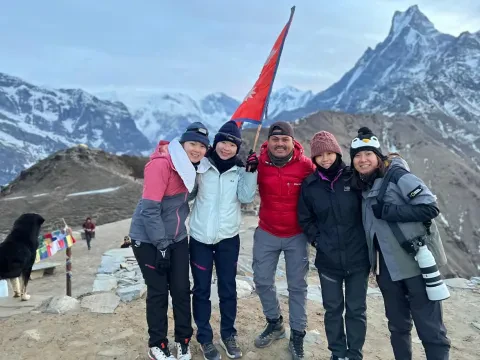
Mardi Himal Trek is a relatively new and less crowded trekking route in the Annapurna region of Nepal. This off-the-beaten-path trek in Nepal offers stunning mountain views, pristine forests, and an opportunity to experience the local culture. Here is a detailed overview of the Mardi Himal Trek:The trek starts from either Pokhara or Kande and follows a less-traveled route through charming villages, lush rhododendron forests, and high alpine landscapes. Here are the key features of the Mardi Himal Trek:Scenic Drive to Kande (1,770m) or Phedi (1,130m): After an early morning drive from Pokhara, reach Kande or Phedi, the starting point of the trek. The road journey provides breathtaking views of the surrounding hills and valleys.Trek to Australian Camp (2,050m): Begin the trek with a gradual ascent through rhododendron forests to reach Australian Camp. Enjoy panoramic views of the Annapurna and Dhaulagiri mountain ranges.Trek to Forest Camp (2,520m): Continue through dense forests filled with oak, maple, and rhododendron trees. The trail offers glimpses of the Machhapuchhre (Fishtail) and Mardi Himal peaks.Trek to Low Camp (2,970m): Ascend through the rhododendron forests, with occasional views of Annapurna South and Hiunchuli. Reach Low Camp, a peaceful settlement with stunning sunset views.Trek to High Camp (3,580m): Continue ascending through alpine meadows and sparse vegetation. The trail opens up to magnificent views of the Mardi Himal, Machhapuchhre, and Annapurna ranges. Reach High Camp, the highest point of the trek.Hike to Mardi Himal Base Camp (4,500m): Wake up early and hike to Mardi Himal Base Camp to witness breathtaking sunrise views over the Annapurna Sanctuary. Marvel at the panoramic vistas of Mardi Himal, Annapurna I, Annapurna South, Hiunchuli, and other peaks. Descend to Siding Village (1,750m): Begin the descent, passing through beautiful forests and traditional villages. Enjoy interactions with the locals and immerse yourself in their rich cultural heritage.Drive back to Pokhara: From Siding Village, drive back to Pokhara, where you can relax by the lakeside and explore the city's attractions.The Secret Ridge: Why the Mardi Himal Trek Deserves a Spot on Your Bucket ListIf you’ve ever looked at photos of the Annapurna region in Nepal, chances are you’ve seen the iconic fishtail peak of Machapuchare towering over lush green valleys. But while thousands of hikers flock to Annapurna Base Camp or Poon Hill every year, a quieter, equally breathtaking trail sits right beside them.The Mardi Himal Trek is Nepal’s hidden jewel—a short, rewarding, and dramatically scenic ridge walk that brings you face-to-face with giant snow-capped mountains without requiring weeks of your life or extreme mountaineering experience.What Makes Mardi Himal So Special?Unlike classic valley routes that weave down along rivers for days before opening up, Mardi Himal is almost entirely a ridge trek. Within a day or two of walking, you break through the dense tree line and find yourself stepping along narrow grassy spines with steep drop-offs on either side. To your left lies the Annapurna Sanctuary valley; to your right, the Modi Khola river valley. The sensation of walking high above the clouds with sweeping 360-degree views is hard to match anywhere else in the Himalayas.A Perfect Short EscapeOne of the biggest perks of this trek is its length. While Everest Base Camp or the Annapurna Circuit demand two to three weeks, Mardi Himal can easily be completed in 4 to 6 days round-trip from Pokhara. This makes it ideal if you're tight on time, adding trekking onto a broader Nepal itinerary, or looking for a high-reward adventure that won't completely exhaust your vacation days.The Journey Through Enchanted ForestsYour journey typically begins at Kande or Phedi, a short drive from Pokhara. The first couple of days feel like walking through a fairy tale. You’ll climb gentle stone staircases surrounded by ancient moss-draped oak forests and giant rhododendron trees. If you visit in spring, the entire mountainside explodes in shades of crimson, pink, and white. The peaceful silence in these woods—punctuated only by bird calls and the crunch of your boots—is the ultimate way to decompress.Breaking Above the Tree Line at High CampBy the time you reach Forest Camp and push upward toward Low Camp and Badal Danda, the landscape shifts dramatically. The dense trees give way to alpine shrubbery, and suddenly, Machapuchare (Fishtail Mountain) seems so close you could reach out and touch it. Reaching High Camp (3,580m / 11,745 ft) feels like entering a different world. Tea houses here sit directly on the narrow ridge, giving you front-row seats to incredible cloud inversions where the valleys below fill with a sea of white mist while you sit above under bright blue skies.The Sunrise Push to Base CampThe absolute highlight of the trip starts well before dawn. Headlamps glowing in the crisp, freezing morning air, you’ll start the final push from High Camp up to Mardi Himal Base Camp (4,500m / 14,763 ft). As the first rays of sunlight hit the peaks, the snow transforms from icy blue to fiery gold. Standing at the base camp viewpoint, directly underneath the towering wall of Mardi Himal and the sacred double peaks of Machapuchare, is a moment that stays with you forever.How Difficult Is the Trek?Mardi Himal is generally rated as moderate. You don't need technical climbing skills, ropes, or crampons during standard trekking seasons. However, don't let the short duration fool you—there are plenty of steep stone steps and continuous uphill climbs. The elevation gain is rapid, so taking a steady pace, staying hydrated, and giving your body time to acclimatize at High Camp are essential to preventing altitude sickness.Teahouse Life and Local CultureAccommodation along Mardi Himal consists of cozy, family-run teahouses. While simple, they offer everything a tired hiker needs: warm meals (from classic dal bhat to piping-hot noodle soups), hot tea, and a warm communal dining hall centered around a wood stove. The local Gurung and Magar communities running these lodges are famous for their warmth and hospitality, adding a rich cultural layer to your mountain adventure.Best Time to Hit the Trail· Autumn (September to November): Offers crystal-clear skies, stable weather, and comfortable daytime temperatures. It's the most popular season for a reason.· Spring (March to May): Brings warm days and stunning rhododendron blooms that paint the hillsides in vibrant colors.If you want a Himalayan adventure that delivers massive views, authentic local hospitality, and quiet trails—all packaged into less than a week—Mardi Himal is hard to beat.The Mardi Himal Trek offers a peaceful and less-crowded experience, allowing trekkers to immerse themselves in the natural beauty and tranquility of the Himalayas. With awe-inspiring mountain views, diverse landscapes, and cultural encounters, this trek is a hidden gem for those seeking a unique adventure in Nepal.
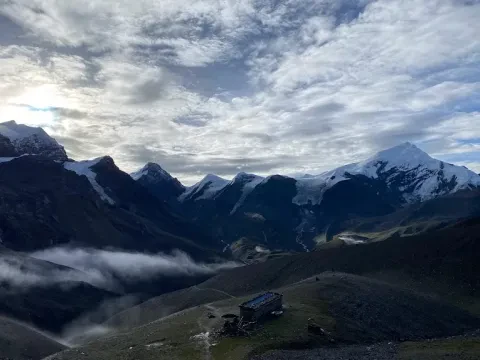
Annapurna Circuit Trek is a classic and popular trekking adventure in the Annapurna region of Nepal. It is renowned for its diverse landscapes, breathtaking mountain views, rich cultural experiences, and challenging yet rewarding nature. The Annapurna Circuit Trek offers a remarkable journey through lush valleys, terraced fields, dense forests, picturesque villages, and high mountain passes. Scenic Drive to Bhulbhule/Besi Sahar: Begin the adventure with a scenic drive from Kathmandu to Bhulbhule or Besi Sahar, the starting point of the trek. Enjoy views of rural landscapes, hills, and rivers along the way.Trek through Marshyangdi Valley: Follow the Marshyangdi River upstream, passing through charming villages like Chamje, Tal, and Dharapani. Marvel at the terraced fields, waterfalls, and dramatic cliffs.Manaslu and Annapurna Massifs: Enjoy breathtaking views of the Manaslu (8,163 meters), Annapurna II (7,937 meters), and other snow-capped peaks as you trek through the lower sections of the circuit.Cultural Encounters: Immerse yourself in the diverse culture of the region as you pass through villages inhabited by Gurung, Thakali, and Tibetan communities. Experience their warm hospitality, taste traditional cuisine, and observe their unique customs and traditions.Pisang and Manang: Explore the picturesque villages of Pisang and Manang, known for their traditional architecture, monasteries, and stunning mountain vistas. Acclimatize and rest here to prepare for the higher elevations.Thorong La Pass: The highlight of the trek is crossing the challenging Thorong La Pass, the highest point on the circuit. Trek through a steep ascent, navigating rocky terrain and snowy slopes, to reach the prayer-flag-adorned pass. Enjoy panoramic views of the Annapurna and Dhaulagiri mountain ranges.Muktinath: Descend from Thorong La Pass to the sacred village of Muktinath, where you can visit the revered Muktinath Temple and experience its religious significance for both Buddhists and Hindus.Jomsom and Kagbeni: Trek through the windswept landscapes of the Kali Gandaki Valley, passing through the charming town of Jomsom and the ancient village of Kagbeni. Experience the unique culture of the region, influenced by Tibetan Buddhism.Natural Hot Springs: After a long day of trekking, soothe your muscles in the natural hot springs of Tatopani. Enjoy a relaxing dip and rejuvenate amidst the serene surroundings.Ghorepani and Poon Hill: Take a detour to Ghorepani and ascend Poon Hill for mesmerizing sunrise views over the Annapurna and Dhaulagiri ranges. Witness a panorama of golden peaks lighting up with the first rays of the sun.Nayapul and Pokhara: Conclude the trek by descending from Ghandruk to Nayapul. From Nayapul, drive back to Pokhara, where you can unwind, celebrate your achievements, and enjoy the lakeside ambiance.The Annapurna Circuit Trek is a remarkable journey that offers a blend of natural beauty, cultural experiences, and personal accomplishment. It is an opportunity to witness the majesty of the Himalayas, immerse yourself in local traditions, and create memories that will last a lifetime.
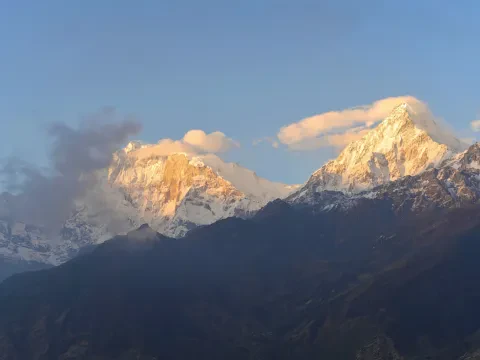
Embark on a journey to explore one of Nepal’s best-kept secrets in the heart of the Annapurna Region. Experience ultimate tranquility and serenity while undertaking the new and relatively unknown Khopra Danda Trek in Nepal. This trek offers something for everyone, from beginners to even the most seasoned hikers. Topping out at an altitude of 3640 m, Khopra Ridge provides unparalleled views mountains such as Dhaulagiri, Annapurna I, Annapurna South, Nilgiri, and countless other mountains in the Dhaulagiri and Annapurna Ranges. Mulde Viewpoint near the village of Dobato provides even better views of the Annapurna Range and Machhapuchhare (aka Fish Tail Mountain) than does the famed Poon Hill, while also having a mere fraction of the tourists.The Annapurna Region offers a wide variety of treks with some of the best mountain views on earth, and every year thousands of trekkers from around the world flock to the Annapurna Region for famous treks like Annapurna Base Camp, Mardi Himal, Ghorepani - Poon Hill, and the legendary Annapurna Circuit. Unfortunately, due to the fame of these well-known treks, the trails along these treks are always crowded. For those that want to experience unspoiled nature and escape the crowd, while still witnessing breathtaking views of the Annapurna Range, Dhaulagiri Range, Nilgiri Himal Range, and of course Machhapucchare, the Khopra Danda Trek is the perfect alternative! Khopra Danda Trek ItineraryAlthough there are many articles written about the Khopra Danda Trek, the information from these articles can be confusing, and even contradictory. This is because the Khopra Danda trail is quite new and relatively untouched. Currently, there is no consensus for the best route to accomplish the Khopra Danda Trek, with treks having different start points, endpoints, and stops along the way. In order to come up with the best itinerary for our clients, Roving Nepal Treks sent its travel planners to the region in search of the best route. The itinerary offered by Roving Nepal Treks represents what we believe to be the best route, combining safe and comfortable trekking with the best views possible. The trekking starts from Ghandruk, which is reached via jeep from Pokhara. This village is home to a large community of local Gurung people, and is a model cultural village of Nepal. After leaving Ghandruk, you will traverse through lush, green forests before stopping at Tadapani for the night. Trekkers will continue to enjoy the serene, forest environment on their way to Dobato, the home of Mulde Viewpoint, a relatively unknown hilltop with incredible views of the Annapurna Range and Machhapuchhare. After watching sunrise from Mulde View Point, the trek continues along a mountain ridge with the same views as Mulde, before heading downhill towards the village of Sistabong, passing through dense forests and by impressive waterfalls along the way. After spending the night at Sistabong, there will be a brief, but physically demanding trek uphill to reach Khopra, a small settlement on a narrow mountain ridge, 3,660 meters above sea level which boast up close views of the legendary Annapurna, Dhalagiri, and Nilgiri Himal ranges. Khopra will make you feel as if you are inside a postcard, the stunning views of the incredible mountains surrounding all around will leave you feeling breathless, in awe of the true scale of the mighty Himalayas. The following morning the trek continues mountain ridges and through dense forests, passing mountain streams and waterfalls until reaching Swanta, a picturesque village dotted with small, hillside farms. After spending the rest of the day Swanta, enjoying the beautiful views and vibrant local community, the next morning the trek will continue downhill towards Tatopani, a village that is home to famous hot springs which provide the perfect location to relax and recuperate after your long and arduous trek. The next day a jeep will drive you back to Pokhara where you can spend the rest of the afternoon strolling along Phewa Lake and reminiscing about the incredible journey you have just completed.Does this trek visit Khayer Lake?No, this particular trek does not visit Khayer Lake. Roving Nepal Treks does offer two treks that visit Khayer Lake, our Khopra Danda with Khayer Lake Trek and our Khopra Danda with Khayer Lake & Poon Hill Trek. Please note, the trek to Khayer Lake is considerably more difficult than any other day on the Khopra Danda Trek. Please see the FAQ's for more information and contact us if you have any questions about whether Khayer Lake is right for you. Can I see Pool Hill on the Khopra Danda Trek?Yes, it is certainly possible to visit Poon Hill on a trek to Khopra Danda. Although this particular trek does not visit Poon Hill, we do offer two Khopra Danda Treks with visits to Poon Hill: the Khopra Danda with Poon Hill Trek and the Khopra Danda with Khayer Lake & Poon Hill Trek. All of our Khopra Treks include a visit to Mulde Viewpoint in Dobato which boast similar (and arguably better) views with a fraction of the visitors that Poon Hill gets, but if you also want to witness the iconic sunrise over Poon Hill, we have trekking packages that allow you to do both on the same trek. In addition, if you are interesting the Mohare Danda Trek, this trek can be started from Poon Hill as well. Contact the travel planners of Roving Nepal Treks and plan your trek today!
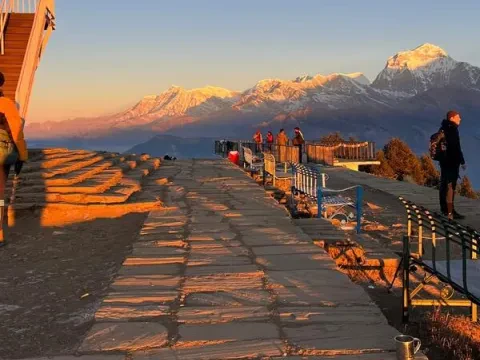
Ghorepani Poon Hill Trek, also known as the Annapurna Sunrise Trek, is a popular and relatively easy trek in the Annapurna region of Nepal. This trek offers stunning mountain views, a glimpse into the local culture, and an opportunity to witness a mesmerizing sunrise over the Himalayas from Poon Hill. Here is a detailed overview of the Ghorepani Poon Hill Sunrise Trek:The trek begins with a scenic drive from Pokhara to Nayapul, a small town that serves as the starting point of the trek. From Nayapul, you commence your trek, following the trail through picturesque villages, terraced fields, and lush forests.The trek takes you through charming villages such as Tikhedhunga and Ulleri, where you can experience the local culture and hospitality of the Gurung and Magar communities. The trail is adorned with beautiful rhododendron forests, especially vibrant during the spring season.The highlight of the trek is reaching Ghorepani, a traditional village located at an altitude of 2,850 meters. From Ghorepani, you wake up early the next morning to hike up to Poon Hill (3,210 meters). As the first rays of the sun touch the snow-capped peaks, you are treated to a breathtaking sunrise over the Annapurna and Dhaulagiri mountain ranges. The panoramic views from Poon Hill are truly awe-inspiring and a photographer's paradise.After the sunrise experience, you trek back to Ghorepani for breakfast and continue your journey. The trail then leads you to Tadapani, another picturesque village nestled amidst forests of rhododendrons and oak trees. Enjoy the serene surroundings and stunning mountain views from Tadapani.From Tadapani, the trek takes you through forests, terraced fields, and charming villages. You pass through Ghandruk, a large Gurung village known for its rich culture and traditional houses. Explore the village and interact with the friendly locals, gaining insights into their way of life.The final stretch of the trek descends to Nayapul, where you board a vehicle and return to Pokhara. Spend some time in Pokhara, relaxing by the beautiful lakeside and reflecting on the incredible journey you've undertaken.The Ghorepani Poon Hill Trek is a rewarding adventure suitable for trekkers of various fitness levels. It offers a perfect blend of natural beauty, cultural experiences, and stunning mountain views. Whether you are a novice trekker or an experienced hiker, this trek is sure to leave you with unforgettable memories.
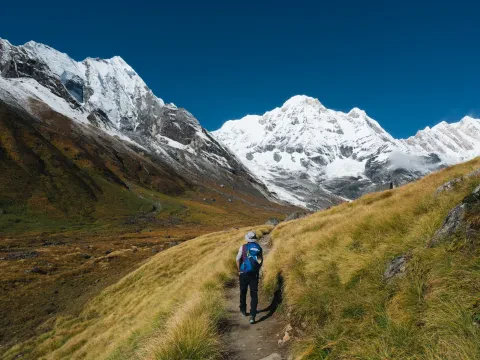
Annapurna Base Camp Trek is a remarkable journey that takes you into the heart of the majestic Annapurna Mountain Range in Nepal. This trek is renowned for its stunning landscapes, diverse flora and fauna, and the opportunity to reach the base camp of the world's tenth-highest mountain, Mount Annapurna (8,091 meters). Here is a detailed overview of the Annapurna Base Camp Trek:The trek begins with a scenic drive or flight from Kathmandu to Pokhara, the gateway to the Annapurna region. From Pokhara, you drive to Nayapul and start the trek, following the trail along the Modi Khola River.As you trek through charming villages, terraced fields, and lush forests, you will encounter the rich cultural diversity of the region. The trail passes through traditional Gurung, Magar, and Thakali villages, providing opportunities to interact with the local communities and experience their warm hospitality.The trek takes you through picturesque landscapes, with views of towering peaks, cascading waterfalls, and lush green valleys. You will encounter diverse flora and fauna, including rhododendron forests, oak trees, and a variety of bird species.Reaching Machhapuchhre Base Camp (3,700 meters), you'll be rewarded with breathtaking views of Machhapuchhre (Fishtail) Mountain (6,993 meters), a sacred peak revered by the locals. The trail then continues towards the ultimate destination, Annapurna Base Camp (4,130 meters), nestled in a spectacular glacial amphitheater surrounded by towering Himalayan peaks.At Annapurna Base Camp, you will experience a sense of awe and achievement as you stand amid a natural amphitheater of majestic peaks, including Annapurna I (8,091 meters), Annapurna South (7,219 meters), Hiunchuli (6,441 meters), and other stunning summits. The sunrise and sunset views from this vantage point are truly awe-inspiring.After spending time at the base camp, the trek retraces its steps back to Nayapul, passing through beautiful villages such as Chhomrong and Ghandruk. Along the way, you can enjoy hot springs, visit traditional mountain monasteries, and immerse yourself in the local culture.The Annapurna Base Camp Trek offers a unique combination of natural beauty, cultural experiences, and breathtaking mountain views. It is a moderate-level trek suitable for trekkers of various fitness levels and provides a memorable adventure in the heart of the Annapurna region.
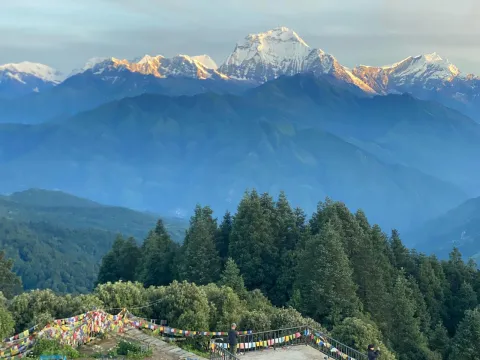
The Ultimate Himalayan Double-Feature: Annapurna Base Camp via Poon Hill TrekThe Annapurna Base Camp via Poon Hill Trek stands as one of the most complete trekking experiences in the world. Often referred to as the ultimate Himalayan double-feature, this journey blends two of Nepal’s legendary trekking trails into a single, seamless 14-day loop. Instead of rushing directly to the high-altitude sanctuary, this route takes you on an expansive detour through deep forests, ancient farming terraces, and cultural hotspots.You do not just walk to a mountain; you watch the landscape shift from sub-tropical river valleys to alpine forests, and finally to a barren glacial world surrounded by a 360-degree wall of rock and ice. This comprehensive guide covers everything you need to know to prepare for this bucket-list adventure.Annapurna Base Camp (ABC) Trek via Poon Hill is a popular and rewarding trekking route in the Annapurna region of Nepal. This trek combines the stunning views from Poon Hill with the breathtaking landscapes and cultural experiences of the Annapurna Base Camp. Here is a detailed overview of the Annapurna Base Camp trek via Poon Hill.The trek begins with a scenic drive from Pokhara to Nayapul, the starting point of the trek. From Nayapul, you start trekking through beautiful villages, terraced fields, and lush forests, gradually ascending along the Modi Khola River.After a few days of trekking, you reach the famous viewpoint of Poon Hill (3,210 meters) before sunrise. From Poon Hill, you are rewarded with a breathtaking panoramic view of the Annapurna and Dhaulagiri mountain ranges, including peaks like Annapurna I (8,091 meters), Machhapuchhre (Fishtail) Mountain (6,993 meters), and Dhaulagiri (8,167 meters). The sunrise over the snow-capped mountains is a mesmerizing experience.Continuing on the trek, you descend to the beautiful village of Tadapani and then make your way towards Chhomrong, a Gurung village with stunning mountain views. The trail then takes you through dense forests, terraced fields, and charming villages, such as Bamboo and Deurali.As you approach Machhapuchhre Base Camp (3,700 meters), you enter a glacial valley surrounded by towering peaks. The close-up views of Machhapuchhre (Fishtail) Mountain are truly awe-inspiring.From Machhapuchhre Base Camp, the trail leads you to the ultimate destination of Annapurna Base Camp (4,130 meters). This hidden sanctuary is located at the foot of the massive Annapurna South (7,219 meters) and Annapurna I. As you stand at the base camp, you are surrounded by a natural amphitheater of towering peaks, creating a sense of awe and accomplishment.After spending time at the base camp, you retrace your steps back to Bamboo, passing through beautiful landscapes, dense forests, and charming villages along the way. From Bamboo, you trek downhill to Nayapul and then drive back to Pokhara.Why This Combined Route Beats the Direct TrailWhile a direct route to Annapurna Base Camp (ABC) is shorter, the combined itinerary via Poon Hill is vastly superior for several key reasons:· Superior Acclimatization: By spending your first few trekking days climbing gradually to Poon Hill (3,210m), your body naturally adapts to the thinning air. This significantly reduces the risk of Altitude Sickness (AMS) later in the trip when you cross the 4,000-meter mark.· A Diverse Visual Palette: Direct routes can feel somewhat linear. The Poon Hill variation introduces you to the classic ridge-line views of the lower Annapurna range before plunges you into the deep gorges of the Modi Khola river.· Deep Cultural Immersion: This longer route passes through a variety of ethnic settlements, letting you witness the unique cultures of the Gurung and Magar communities in villages like Ghorepani, Ulleri, and Chhomrong.Understanding the Geography of the Annapurna SanctuaryThe geographical layout of this trek is nothing short of spectacular. The trail acts as a natural staircase, transitioning through several distinct ecological zones as you gain altitude.evation Profile Visualizer:The Iconic Ridges of Ghorepani and Poon HillYour journey begins in the lush lower foothills of the Annapurna Conservation Area. Here, the landscape is defined by rolling green hills, dense sub-tropical forests, and spectacular terraced farms that seem to cling precariously to the hillsides. As you climb toward Ghorepani, the air grows cooler and the forests change to ancient oak and rhododendron. The ridge-line at Ghorepani acts as a natural viewing platform, offering a dramatic barrier between the deep valleys and the high peaks.Crossing the Modi Khola Gorge to the Base CampOnce you descend from the Ghorepani ridge, the geography changes dramatically. You enter the deep, steep-sided gorge of the Modi Khola river. This river drains the entire glacial melt of the Annapurna Sanctuary. The trail here is carved directly into the valley walls, winding through dense bamboo groves and oak forests. As you climb past Deurali, the valley suddenly pinches closed, only to open up into the high-altitude, oval-shaped glacial basin known as the Annapurna Sanctuary.Best Season for the Annapurna Base Camp and Poon Hill TrekTiming is everything when planning a trek in the Himalayas. The weather patterns in Nepal divide the trekking year into four distinct seasons, each offering a completely different experience.SeasonMonthsWeather ConditionsTrail HighlightsSpringMarch to MayWarm days, clear mornings, occasional afternoon cloudsBlooming rhododendron forests, green valleysAutumnSeptember to NovemberCrisply clear skies, dry trails, cool temperaturesMaximum visibility, peak festive seasonWinterDecember to FebruaryVery cold, heavy snow at high altitudesQuiet trails, dramatic snowscapesMonsoonJune to AugustHigh rainfall, slippery trails, cloud coverLush greenery, cascading waterfallsSpringtime Rhododendron Blooms (March to May)Spring is widely considered one of the two golden windows for trekking in the Annapurna region. During these months, the lower hillsides erupt into a sea of red, pink, and white as the giant rhododendron forests bloom. The temperatures are comfortably warm at lower elevations, and the high-altitude base camp begins to thaw out. While there can be occasional afternoon clouds, the morning views are spectacular.Golden Autumn Views (September to November)Autumn is the absolute peak season for trekking in Nepal. After the monsoon rains wash away the dust, the atmosphere is exceptionally clean and dry, resulting in razor-sharp mountain views. The weather is highly stable, making it the safest time to head into high-altitude areas like ABC. However, because the conditions are so perfect, the trails and tea houses during these months can be quite busy.Can You Trek ABC via Poon Hill in Winter or Monsoon?While possible, trekking during winter or monsoon presents significant challenges:· Winter (December–February): High-altitude passes and the path between Deurali and MBC can experience heavy snowfall and avalanche risks. Many tea houses close, and temperatures drop far below freezing.· Monsoon (June–August): The trails are wet, slippery, and prone to leeches. Heavy cloud cover often hides the mountains, and landslides can cause travel delays along the highways.Difficulty Level: Is This Trek Right for You?The Annapurna Base Camp via Poon Hill Trek is rated as moderate to challenging. You do not need any technical climbing skills, ropes, or crampons, but you must possess a solid level of physical endurance."A trekker's attitude on the trail is just as important as their physical preparation. Pace yourself, stay hydrated, and enjoy the journey rather than focusing solely on the destination."Understanding the Steep Stone Stairs of UlleriOne of the most famous challenges on this route is the steep stone staircase leading up to Ulleri on Day 4. Consisting of more than 3,000 stone steps, this section tests your leg strength and cardiovascular endurance. The key to conquering Ulleri is to take slow, rhythmic paces, keep your breathing steady, and take frequent short breaks to look back at the expanding valley views.Managing Elevation Gain and Altitude Sickness (AMS)As you trek past 3,000 meters, the atmospheric pressure drops, meaning there is less oxygen with every breath.To stay safe and avoid Acute Mountain Sickness (AMS), we strictly implement the following guidelines:1. Walk Slow (Bistari, Bistari): Never rush to catch up with others. Keep a pace where you can easily hold a conversation.2. Hydrate Constantly: Drink 3 to 4 liters of clean water daily.3. Avoid Alcohol and Sleep Medication: These can suppress your breathing and mask altitude symptoms.4. Ascend Gradually: Our 14-day itinerary limits daily sleeping elevation gains to safe limits.Essential Trekking Permits for the Annapurna RegionTo legally enter and trek through the Annapurna Conservation Area, you must secure two main permits. At Roving Nepal Trek, we handle all of this paperwork for you prior to your arrival:· Annapurna Conservation Area Project (ACAP) Permit: This permit supports local conservation efforts, trail maintenance, and community development within the region.Food and Accommodation: What to Expect in Mountain LodgesThe Annapurna region features some of the best-developed trekking infrastructure in Nepal. You will be staying in local tea houses—family-run mountain lodges that offer basic but cozy rooms and hot meals.· The Rooms: Typically consist of twin single beds with foam mattresses, clean sheets, pillows, and heavy blankets.· The Restrooms: Lower down, many lodges offer attached bathrooms with hot showers. As you get higher, bathrooms become shared, and hot showers may require a small additional fee (heated via gas or solar power).· The Food: Menus are surprisingly diverse, featuring the traditional staple Dal Bhat (lentil soup, rice, and vegetable curry), pasta, noodles, pancakes, oatmeal, and fresh eggs.Upgraded Mountain Lodges vs. Standard Tea HousesFor travelers seeking elevated comfort, we offer an Upgraded Lodging Package. In key destinations along the lower loop (like Tikhedhunga, Ghorepani, and Jhinu Danda), we bypass standard rustic tea houses and book you into premium lodges. These properties offer private, en-suite bathrooms, heated rooms, softer bedding, and more extensive dining options, allowing you to recover in total comfort.Training and Physical Preparation GuideTo ensure you enjoy every step of your 14-day trek rather than just enduring it, we recommend beginning a targeted physical training plan 4 to 6 weeks before your trip:1. Cardiovascular Training: Build your aerobic base with running, cycling, swimming, or rowing 3 to 4 times a week.2. Leg Strength: Incorporate squats, lunges, step-ups, and calf raises into your workouts to prepare your legs for the thousands of downhill and uphill steps.3. Practice Hikes: If possible, go on weekend day-hikes wearing your trekking boots and a loaded backpack. This helps condition your shoulders, core, and feet.Why Travel with Roving Nepal Trek?Choosing the right local partner is essential for a safe, stress-free, and deeply rewarding Himalayan adventure. When you book with Roving Nepal Trek, you benefit from:· Expert Local Guides: Our guides are fully licensed, first-aid certified, and hold years of experience navigating the Annapurna trails.· Ethical Porter Treatment: We strictly adhere to ethical porter guidelines, ensuring fair wages, appropriate load limits, and proper gear for our field staff.· Seamless Logistics: From airport transfers and high-quality private vehicles to permit acquisitions and lodging bookings, we manage every single detail of your journey so you can focus entirely on the mountains.The Annapurna Base Camp trek via Poon Hill offers a perfect combination of stunning mountain views, diverse landscapes, cultural encounters, and a sense of adventure. It allows trekkers to experience the beauty of the Annapurna region and witness the grandeur of the Himalayas up close.
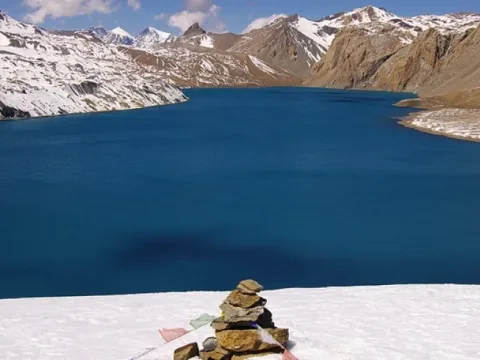
Tilicho Base Camp Trek is a stunning and challenging trek in the Annapurna region of Nepal. It is renowned for its breathtaking mountain views, high-altitude landscapes, and the opportunity to visit the mesmerizing Tilicho Lake, one of the highest lakes in the world. Here is a detailed overview of the Tilicho Base Camp Trek:The Tilicho Base Camp Trek takes you through a variety of landscapes, from lush valleys and dense forests to barren alpine terrain. Here are some key highlights of the trek: Tilicho Lake: The main highlight of the trek is the visit to Tilicho Lake, located at an altitude of 4,919 meters. Surrounded by snow-capped peaks, including Annapurna II and Gangapurna, the turquoise waters of Tilicho Lake offer a truly mesmerizing sight.Annapurna Circuit: The trek follows a section of the famous Annapurna Circuit, one of the most popular and diverse trekking routes in the world. You will pass through beautiful villages, terraced fields, rhododendron forests, and high mountain passes.Mesokanto La Pass: The trek offers an optional detour to Mesokanto La Pass, which provides stunning panoramic views of the Annapurna and Manaslu ranges. This side trip adds an extra challenge and rewards you with breathtaking vistas.Thorong La Pass: The trek also includes crossing the challenging Thorong La Pass (5,416 meters), which is the highest point of the Annapurna Circuit. This is a memorable and exhilarating experience that offers incredible views of the surrounding peaks.Why Choose the Annapurna Circuit Trek with Tilicho Lake?This isn't your average walk in the woods. Combining the classic Annapurna Circuit with a massive side trip to Tilicho Lake creates one of the most visually stunning journeys on the planet. We love this specific route because it perfectly breaks up the standard trail and takes you way off the beaten path. You get all the lush valleys and subtropical forests of the lower Marsyangdi River on the way up. Then, bam. Everything changes.You're suddenly thrust into a high-altitude desert environment that feels more like the surface of the moon than the Himalayas. Adding Tilicho, one of the world's highest lakes sitting at 4,919 meters, turns a great trek into an absolute masterpiece. We've guided countless hikers up those scree slopes. The look on their faces when they finally see that massive expanse of turquoise water surrounded by imposing glacial peaks is always priceless. It's tough, we won't lie to you about that. But the sheer variety of landscapes, local Gurung and Manangi cultures, and raw alpine wilderness makes every single blister worth it.Navigating the Trail to Tilicho Lake Base CampLet's talk about the actual hike to the lake. It gets intense fast. After you leave Manang to acclimatize, the path splits away from the main Thorong La route and heads straight into the wild. The trail leading to Tilicho Base Camp is notoriously tricky. You'll be crossing steep, narrow landslide areas where the gravel constantly shifts under your boots. Watch your step. Seriously. We always tell our groups to stay close, move steadily, and keep their eyes on the path rather than the jaw-dropping views of Gangapurna towering to your left.Once you hit base camp and finally rest up, the early morning push up to the lake itself is a serious lung-burner. It takes about three to four hours of steep climbing through cold, thin air before the terrain finally levels out. But when you crest that final ridge and the freezing wind hits your face, the sight of Tilicho Peak perfectly reflected in the icy blue water is something you'll never forget.Conquering Thorong La Pass at 5,416 MetersThis is the big one. It demands respect.Crossing Thorong La Pass is the absolute climax of the entire circuit. After you return from the lake and rejoin the main trail at Yak Kharka, you'll slowly make your way up to Thorong Phedi or High Camp. The summit day starts in the pitch black. We usually wake you up around 3 AM. It is brutally cold. You'll strap on your headlamps and start putting one foot in front of the other while the stars slowly fade out behind the towering peaks. The climb up to the 5,416-meter pass is a slow, grueling slog that tests your mental grit just as much as your physical stamina. Breathe in. Breathe out. Just keep moving. Reaching the prayer-flag-draped summit board brings an incredible rush of relief and pure adrenaline, followed by a knee-punishing 1,600-meter descent down into the Mustang region toward Muktinath. It hurts. Your knees will complain endlessly. But you'll be riding that high for weeks.Smart Acclimatization and Trail SafetyAltitude sickness doesn't care how fit you are at home. It just doesn't.That is exactly why we bake so much acclimatization time into this specific itinerary. By heading to Tilicho Lake before tackling Thorong La, you are actually doing your body a massive favor. Sleeping at Tilicho Base Camp forces your body to adapt to the thin air, which makes the final push over the pass much more manageable. Still, we monitor our trekkers constantly. We check your oxygen levels, ask about your headaches, and make sure you're drinking gallons of garlic soup and water. Hydration is everything up here.If the weather turns nasty or someone shows serious signs of Acute Mountain Sickness (AMS) on the way up, we turn around. No summit is worth risking your life. Our guides know these valleys like the back of their hands, and they know exactly when to push forward and when to play it completely safe.The Best Time to Trek the Annapurna RegionTiming can make or break your trip. You really want to aim for the two main trekking windows: autumn and spring. October and November are absolute gold. The monsoon rains have completely washed the dust out of the sky, leaving you with razor-sharp mountain views and stable, crisp weather. It gets busy, though. You will definitely share the trail with plenty of other hikers and pack mule trains kicking up dirt. If you want something a bit quieter with massive splashes of color, go in April or May. The rhododendron forests in the lower sections explode into vibrant reds and pinks, transforming the lower valleys completely.Winter gets insanely cold. Heavy snowfall frequently blocks both the path to Tilicho and Thorong La Pass entirely, turning a tough hike into a dangerous one. We generally avoid the summer monsoon season too, simply because the lower trails turn into a muddy, leech-infested mess and heavy clouds hide all those massive peaks you flew across the world to see.Packing Right for High Altitude ExtremesPack smart, pack light. You're going to experience four different seasons in a single two-week trip. Down low near Besisahar, you'll be sweating in shorts and a t-shirt. By the time we hit the landslide areas near Tilicho, you'll be shivering if you stop moving for more than five minutes. You absolutely need a solid layering system. Start with high-quality merino wool base layers that wick sweat away from your skin. Throw in a warm fleece, and top it all off with a heavy-duty down jacket and a reliable windproof shell. Your boots are your best friends. Break them in before you arrive in Kathmandu, or your feet will be a painful mass of blisters by day three.Bring a warm sleeping bag rated for at least -15°C. Stash plenty of high-energy snacks in your pockets. Also, grab a trusty pair of trekking poles to save your knees on those brutal descents. Don't overpack. You have to carry your daypack, and our porters have strict weight limits too.Diverse Landscapes: The trek takes you through a wide range of landscapes, including lush green valleys, pine forests, rocky moraines, and glacial terrain. Each day brings new and varied scenery to captivate your senses.Rich Culture: Along the way, you will encounter diverse ethnic communities, including Gurungs, Thakalis, and Tibetans, each with their own distinct culture and traditions. You will have opportunities to interact with the locals and gain insight into their way of life.Natural Beauty: The trek offers stunning views of snow-capped peaks, including Annapurna II, Annapurna III, Gangapurna, and Tilicho Peak. The ever-changing vistas of the mountains, valleys, and glaciers create a truly awe-inspiring backdrop.Challenging Terrain: The Tilicho Base Camp Trek is considered moderately challenging due to its high altitude and steep ascents and descents. Proper acclimatization and physical fitness are essential for a safe and enjoyable trek.Unique Flora and Fauna: The region is home to a variety of plant and animal species. You may spot rare Himalayan wildlife such as the elusive snow leopard, blue sheep, and various bird species. The diverse flora includes colorful rhododendrons, orchids, and alpine flowers.Remote and Off-the-Beaten-Path Trek in Nepal: Compared to the popular Annapurna Circuit, the Tilicho Base Camp Trek offers a more remote and off-the-beaten-path experience in Nepal. The trek provides a sense of solitude and tranquility as you explore the pristine mountain landscapes.The Tilicho Base Camp Trek is a remarkable journey that combines natural beauty, cultural encounters, and personal achievement. It offers a unique opportunity to explore the majestic Himalayas and experience the serenity of the high-altitude wilderness.
Annapurna region of Nepal is an abode of Nepal’s most famous and beautiful trekking routes. Annapurna Base Camp Trek, Annapurna Circuit Trek, Ghorepani Poon Hill Trek, and Mardi Himal Trek are the most famous trekking routes of the region. Along with its popularity, these trails attract thousands of trekkers every year. Therefore, these trekking trails are always bustling. If you love to trek in a tranquil environment yet want to experience the mountain thrill like in those trekking routes of the Annapurna region, Mohare Danda Trek is an ideal choice. Mohare Danda (Hill) is nearby Poon Hill. It is 100 m higher than Poon Hill. Interestingly, you can see the Poon Hill from the top of Mohare Hill. To avoid the bustling crowd of Ghorepani Poon Hill, trekkers are choosing the Mohare Danda Trek as an alternative. The view is similar to or more scenic from Mohare than from Poon Hill. Where can I see the best close-up view of Mt. Dhaulagiri (8167 m)?The top of the Mohare Danda is the best place to get a close-up view of Mt. Dhaulagiri. The gorgeous view of Mt. Dhaulagiri is possible during this trek. Along with the view of this mountain, trekkers can relish the vista of mountains like the Annapurna Himalayas, Nilgiri, Machhapuchhre, Himchuli, Gangapurna, etc. Moreover, the trail offers the chance to witness more than 20 snowy mountains. Community-Based Lodge Trek in NepalFar from the bustling commercial trekking routes, the Mohare Danda Trek is the best community-based lodge trek in Nepal. Trekkers can get an authentic taste of the local lifestyle while trekking on the trail. Almost all the lodges and restaurants on this trekking route are run by the community. The place is inhabited by the Magar people. These people are the inhabitants of the western hilly region of Nepal mainly districts like Myagdi, Kaski, and Parbat. During the trek, trekkers can explore the villages, local community farms, grassy meadows, and splendid vantage points. The local way of living can be a fascinating thing to experience for foreigners. The lifestyle here is very laidback and pure. Throughout the trip, trekkers can get the astounding experience of the Magar people’s culture harmoniously synchronized with the magnificent natural beauty. Is it possible to combine Annapurna Base Camp Trek or Poon Hill Trek with Mohare Danda Trek?Yes, it is possible to extend Mohare Danda Trek with an itinerary of Annapurna Base Camp Trek or Poon Hill Trek. The location of the Mohare Danda Trek is in the vicinity of the ABC Trek route and Poon Hill Trek route. Therefore, ask the travel planners of Roving Nepal Trek to include the itinerary of the place that you want to add to the trip. What is the altitude of Mohare Danda and How difficult is Mohare Danda Trek?The maximum altitude in this trek is Mohare Danda (3313 m). It is within the limit of the place from where the risk of altitude sickness appears. Normally, altitude sickness occurs from a place above 2500 m. The high-risk zone is beyond 4000 m from sea level. Therefore, the Mohare Danda Trek can be termed as a fair altitude sickness risk-free trekking trail. This doesn’t mean that the trek is easy to trek on. Under the grading difficulty, the trek is a moderately easy trekking route. In some sections of the trekking, trekkers have to make the challenging steep uphill and downhill walking. Therefore, it is a tiring and physically demanding trekking route. Best Time to do this Dhaulagiri Community TrekThe months of spring season are the best time to do Mohare Danda Trek. The route is also called the Dhaulagiri Community Trek. All the accommodations and food services in the trail are operated by the community. Therefore, it is called the community trek trail. During the spring season, the forest of rhododendrons gets colorful. The skies are clear and you can get a mesmerizing view of cascading hills and snow-capped mountains. Avoid the wet monsoon season! The months like July and early August are not appropriate to do this trekking. However, you can do trekking in the autumn season as well as the winter season. Poon Hill vs Khopra Hill vs Mohare Danda (Hill)Find out the difference between Poon Hill, Khopra Hill, and Mohare Danda. These three hilltops are the famous vantage point of the Annapurna region of Nepal. These places host the best short Annapurna Trekking route inside the Annapurna Conservation Area Project (ACAP) region. Factors Poon Hill Mohare Danda Khopra Hill Altitude 3210 m 3313 m 3640 m Difficulty Level Easy Moderately Easy Moderate Mountain Vista Good Best Outstanding Trail Condition Commercial Semi-Commercial Off the Beaten Accommodation & Food Commercial Community-Based Basic Cost 600 $ in an average 800 $ in an average 850 $ in an average Major Attraction Annapurna South Dhaulagiri Annapurna South Among these three trekking routes, the Poon Hill Trek route is the most commercial. You can find a plethora of accommodations and restaurants of different levels. In the Mohare Danda Trek route and Khopra Hill Trek route, these amenities are barely available in abundance. However, these two trek routes are tranquil and untouched by many. Therefore, to enjoy nature peacefully choose the Mohare Danda Trek. You can extend your trek to Poon Hill too if you would like. Book the Mohare Danda Trek in Nepal and experience the authentic rural environment of Nepal. The trek route is the perfect example of an eco-friendly community-operated tourist trail. The construction of the road up to Ghorepani has curtailed the number of trekking days on the Poon Hill Trek route. Moreover, the latest development works have ruined the natural beauty of the area too. Gradually, people are noticing the attractions of the Mohare Danda. Before the trail gets crowded, pack your bags and tie your trekking shoelaces! Embark on the remarkable trekking journey of Mohare Danda. You will be rewarded with organic food, fresh mountain air, green lush forests, laidback village life, and enchanting mountain vistas. Roving Nepal Trek has the best alternative itineraries to do the trek. Contact our travel planners now!
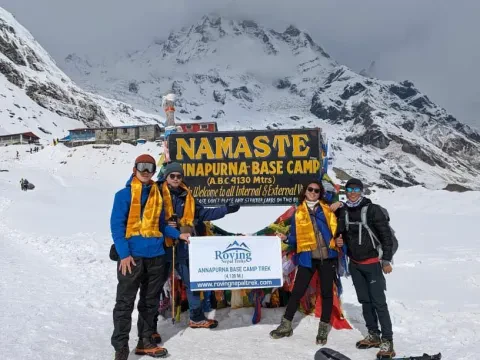
An opportunity to trek the 10th highest mountain in the world with the best guides and people from Roving Nepal Trek is an opportunity of a lifetime. Annapurna Sanctuary Trek or what we call the ABC Trek is one of the most beautiful trek. A lot of the untouched trails will be up for grabs and you will have to be fully prepared to complete it. As Annapruna Sanctuary Trek elongates to 13 days you will be familiar with nature and also the local communities. Not only the positive aspects of Annapurna Sanctuary Trek but there is much more to talk about and understand. Allow Roving Nepal Trek to enlighten all of the readers. Overview of Annapurna Sanctuary Trek A chance to trek Annapurna is an opportunity of a lifetime. During the trek, you will have an opportunity to view the Annapurna, Dhaulagiri, and Machhapuchre ranges. Not only will that trekkers have an option of enjoying the local Gurung and Magar communities. It is a 13-day trek so trekkers are advised to find some off time in their busy schedule. The journey starts from Kathmandu which moves to Pokhara. Later you will be reaching Nayapul which particularly is the starting point for the Annapurna Sanctuary Trek. The journey will be a mixed bag of hard and easy days. In like manner you will walk across rhododendron fields, pine villages, rivers, local villages, and finally base camp. As exciting as it may sound, the Annapurna trek is better in real experience. How tough is the Annapurna Sanctuary Trek? It doesn't matter whether you do the Everest Trek, Annapurna Trek, or Makalu Trek the toughness of the trek depends upon your physical abilities. When we focus on Annapurna Sanctuary Trek it is termed to be a moderately challenging trek as you move around some of the tallest mountains of the world. Any trek that goes beyond 10 days can be tough for many. Therefore Roving Nepal Trek would suggest you gain basic physical fitness, to say the least. Trekking for an average of 6 hours every day can be hard for others. When we put light into the terrain, it is quite simple and the trails aren't too scrubbed or up and down. With proper guidance and prior knowledge about trekking you will complete the trek very easily. Best Season to do Annapurna Sanctuary Trek Annapurna Sanctuary Trek is a high altitude assignment so knowing the right season is the key. A lot of the trekking options in the context of Nepal are better during the autumn and spring seasons. Similar is the case with Annapurna as well. You will need to plan your trek for March, April, May, August, September, October, and November. During these seasons the weather remains brilliant. Not only that but the trekkers will have an opportunity to embrace clear blue skies and enjoy the beauty of Nepal in a wholesome manner. Even though trekking is possible in every season Roving Nepal Trek won't suggest treks during the monsoon and winter seasons. Permits Required For Annapurna Sanctuary Trek When we talk about the permits needed for Annapurna Sanctuary Trek it is plain and simple. You will need to have a TIMS card along with the Annapurna Conservation Area Project permit. Both of the permits will be available at the Nepal Tourism Board. But any trekker who books with Roving Nepal Trek shouldn't worry about it. We will take care of all the permits and allow our guests to fully enjoy the trip. Talking about the permit fee it will be included in the package and you needn't be worried about paying extra charges for it or also queuing in line for hours at the offices. Food and Accommodation During Annapurna Sanctuary Trek If you are thinking about the food and accommodation that you will receive during the Annapurna Sanctuary Trek, they are the basic ones. In the case of accommodation, there are lodges and tea houses which serve the basic facilities for all the trekkers. With a lack of transport along the trail, all the services are basic and at times expensive well. Thankfully Roving Nepal Trek takes care of the trekkers with the best of the available accommodation facilities. Similarly talking about the food is the best part. All the trekkers associated with Roving Nepal Trek will receive food three times namely breakfast, lunch, and dinner. All the food will be prepared by the tea houses and lodges. Mostly we suggest our guests go for Dal Bhaat, Thakali, Dhido, etc. These foods have the highest level of nutrients which allows you to get the energy for an easy trek and recovery. Cost of Annapurna Sanctuary Trek The cost of any trekking option in Nepal is directly related to the quality of service provided to the particular client or group. The same is the case with Annapurna Sanctuary Trek. Based on the quality of service a particular individual is willing to take, the cost will either rise or decrease. Putting light into it, the accurate price is hard to explain. With the personalized package, the cost also fluctuates. Readers who are willing to know the cost and facilities that will be provided to them can directly call Roving Nepal Trek. You can also visit our website and drop in your query. We will be more than happy to help.
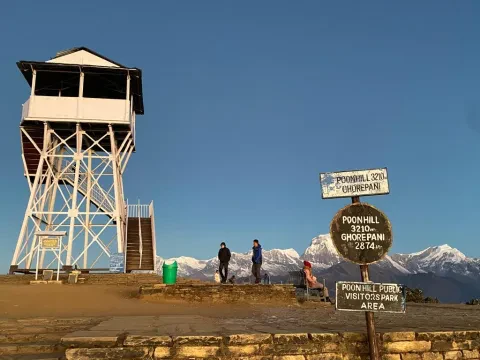
Talking about trekking in Nepal, Mardi Himal via Poonhill trek is one of the easiest months. During the peak months, this trek tends to get very busy. This trek is easily accessible for everyone and any trekker can do it easily. From amazing sunrise views to easier trails and the floral beauty along the way, Mardi Himal via Poonhill is a trekker's delight. Roving Nepal Trek would like to show what needs to be understood before this trek. Major Highlights of Mardi Himal via Poonhill Trek Incredible view of Pokhara and its beautiful landmarks Rhododendron and pine trees along with varied Gurung communities along the way Stunning sunrise view from Poonhill Enticing mountains like Dhaulagiri, and Annapurna ranges from the Poonhill viewpoint Why Book With Roving Nepal Trek for Mardi Himal Trek via Poonhill There are plenty of trekking agencies in Nepal that provide service to the trekkers. Be it Mardi Himal Trek via Poonhill or Annapurna, there are agencies to do so. But with Roving Nepal Trek we don't sell the package but an experience that will last for a lifetime. From the security of our guests to a hassle-free experience, booking with Roving Nepal Trek is different. Some major reasons that highlight the case are: Expert local guides with massive local community knowledge. Specialized packages based on the requirements of the trekkers. Major focus and priority on sustainable and responsible tourism Exclusive partnership with the local community for community development Seamless booking options with a major online presence. Is Mardi Himal Trek via Poonhill hard? The Mardi Himal Trek via Poonill is termed an easy trek. Although the route is off you get a chance to view beautiful mountains all along the journey. Trekkers need basic physical fitness but it is critical to understand that you shouldn't be a pro to achieve it. Meanwhile, basic skills and proper training from Roving Nepal Trek will make the journey easier. Roving Nepal Trek has also prepared the itinerary with great care and focus. Proper acclimatization, first aid safety, and the right experience have been the focus. So Mardi Himal Trek via Poonhill mustn't be difficult. Best Season to Do Mardi Himal Trek Via Poonhill The best time to do the Mardi Himal Trek via Poonhill is from March to May and September to October. These are the seasons for spring and autumn. The weather in the mountains remains clear and you can enjoy the beautiful outcome during this period. Along with the clear trekking trails, you have an option to enjoy the snow-capped mountains along with glowing flora and fauna. A lot of the trekkers at Roving Nepal Trek perform the winter or rainy trek. But the challenges during these seasons are on the high. Although Mardi Himal Trek is quite easier compared to others, we don't suggest it during winter and monsoon. Cost of Mardi Himal Trek via Poonhill Every trek is different and the cost for every trek varies from time to time. You need to be certain about the time you want to book a trek. As we know the Mardi Himal Trek via Poonhill is comparatively cheaper, it is important to understand that the cost changes based on the facilities you wish for. It is tough to predict the exact cost of this trek. However, you contact Roving Nepal Trek or visit our office so that we can guide you through the overall process and outcome of this trek. Alternative Treks With Mardi Himal Trek via Poonhill Not every reader will be excited to know about Mardi Himal Trek. Anyone who looks for a major thrill during the trek might not be satisfied with only Mardi Himal. As a result of that it is important to provide alternative routes. Not only Mardi Himal, but Roving Nepal Trek has other trekking package options that could be more thrilling and take more or less time. The alternative options include: Annapurna Base Camp Trek Ghorepani-Poonhill Trek Pokhara City Tour Mardi Himal Trekking without Poonhill Permits Required for Mardi Himal Trek via Poonhill It doesn't matter which trail you are planning to trek in Nepal, legal permits are a must. But with Roving Nepal Trek we will take care of all the permits. You will have an option to fully enjoy the trek without worrying about which permit to get cleared. First of all, a TIMS card will be needed. You can get it from the Tourism Board in Kathmandu. Secondly, all the trekkers must have an Annapurna Conservation Area Project card. The cost for these permits could be different for Nepalese and international citizens. Without an ACAP card, entering the Annapurna mountain region is impossible. You can easily get this permit from the Tourism Board in case you are trekking solo.
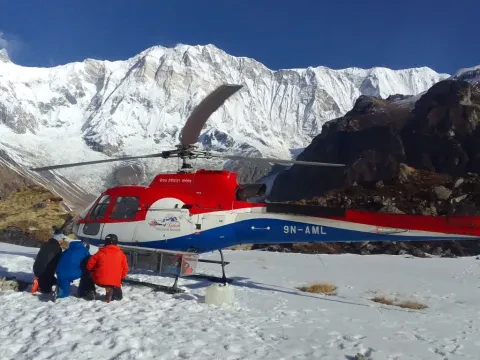
Sitting pretty in the heart of Annapurna mountain the Annapurna Base Camp with Heli Return Trek is the right excursion for you. In a total of 9 days, Roving Nepal Trek will arrange your dream trekking option. From rich culture to captivating mountains and unending landscapes, Annapurna Base Camp with heli tour is the right selection. Often called the tough trekking option, it is critical to understand, that you will need a better agency like Roving Nepal Trek to get the desired results. Cultural Importance of Annapurna Base Camp Trek with Heli Tour Every mountain in Nepal is sacred and so is Annapurna mountain. The importance of Annapurna is massively visible. As the Gurung community resides in the Annapurna region, they celebrate Lhosar and welcome tourists with open arms. Along with that celebrating culture and festivals with the local community allows you to understand them better. The cultural importance and value of the Gurung people can be massively seen in their hospitality. Lastly, Gurung follow and admire monasteries and you can find plenty of them in Tadapani and Chhomrong. All in all every trekker will be included in the cultural importance of the Gurung people. Preparation Tips for Annapurna Base Camp Trek with heli tour It is very important to have the right set of preparations if you are willing to do the Annapurna Base Camp trek with a heli tour. As we know that the tour is rated to be a moderate one you need to be prepared. From the documents to hotel bookings and proper guide everything will be provided by Roving Nepal Trek. But there are other factors that trekkers need to look into. Be physically fit by practicing cardiovascular exercise, strength training, and hiking. Try and conduct some smaller trekking plans to acclimatize to the changing altitude. Use the proper gear for the trek which could be purchased even in Kathmandu. Only pack what's more important and try to keep your luggage more lightweight. Always focus on proper nutrition and hydration as the mountains could be massively energy-sapping. Difficulty of Annapurna Base Camp Trek with heli return Every trek has its challenges and can be difficult on its terms. But with Annapurna Base Camp trek things are different. It is an easy to moderate trek with the maximum altitude being 4130m. If you can maintain your composure at up and downhill trails, it is an easy trek for you. In like manner, Roving Nepal Trek prepares itineraries in such a way that we ease every trekker in the journey. From good nutritious food to proper accommodation, regular water breaks, and stops, we take care of every need of the trekker. Alternative Treks to Annapurna Base Camp Helicopter Tour The readers and enthusiastic trekkers who aren't interested in ABC with heli tour can have other options. The first one is the EBC trek with heli trek. This will allow you to admire the beauty of Everest with easy return. Secondly, we could talk about Langtang Valley Heli Trek which also lasts for 8 days and throws in similar kinds of challenges and achievements. Trekkers can choose any one of them. Permits Required to Complete Annapurna Base Camp Trek with Heli Tour The trekkers who are confused whether they require the cards or not, well to be clear, you do need the permits to enter any trekking region in Nepal. The first one is the TIMS (Trekkers Information Management System) card which is a basic entry of the tourists into the country. The second permit is the Annapurna Conservation Area Permit card often called the ACAP permit. Both of these permits could be easily available at the Nepal Tourism Board. But if you are willing to remove all of this hassle, connect Roving Nepal Trek as we provide our guests with all the permits without much of an issue. Cost of Annapurna Base Camp with Heli Tour The cost of Annapurna Base Camp Trek with Heli Tour is directly related to the facilities you wish to gain during the trip. Anyone who wishes for private facilities might have to pay a higher amount. Along with that the time of the year, and the difficulty of the trek could slightly impact the overall. It is very difficult to predict the exact cost but fair to say that Roving Nepal Trek uses market market-competitive rate to this point. There will be no hidden charges and everything will be transparent with the trekker. All you have to do is visit Roving Nepal Trek or call us and let us handle the most beautiful trekking experience for you in Nepal.
A new destination for hike lovers, Mohare Danda Trek could be an alternative to Annapurna Base Camp Trek. Mohare Danda Trek is a short trek that also takes you through the beauty of Poonhill. Nepal Trek is known for arranging some beautiful itineraries, mainly for Mohare Danda. With Mohare Danda's trek with Poonhill being a newfound location, it is important to maintain a better image. There are plenty of undiscovered gems when we talk about Mohare Danda but detailed information about the place is important and Roving Nepal Trek performs that for all the readers. The best time to do the Mohare Danda Trek with Poonhill Any trekker willing to do the Mohare Danda trek can perform the trek any time of the year. With the altitude being not too high, it is easier to complete the Mohare Danda trek even during monsoon and winter. However, the experience during different seasons might be different. For the best experience always choose either spring or autumn season. These seasons fall between March to May and September to November. With no chance of rainfall, cool temperature, and clear blue skies along with plenty of fellow trekkers, the journey goes outstanding. Likewise, during the summer season, there is plenty of rainfall and hot weather. Trekking in the hot season could be more energy-sapping. Winter however could be managed as the temperature doesn't drop too much. But you might be away from the beautiful mountain views due to fog. Is Mohare Danda Trek with Poonhill difficult? No Mohare Danda trek along with Poonhill isn't difficult. Anyone with basic fitness and a keen interest in trekking can hop into with Roving Nepal Trek. With the help of talented guides and porters, Roving Nepal Trek makes sure that you have an outstanding journey, to say the least. As the altitude is below 3500m basic fitness is also useful. But if you have any medical condition, always contact the doctor before joining this trip. Food and Accommodation during the Mohare Danda trek with Poonhill The food and accommodation are outstanding during the Mohare Danda trek with Poonhill. With the high-quality facility of stay, you will have local, western, and authentic food every day. When trekkers enter the trekking region, they would have to be accommodated into the sharing bedrooms. Roving Nepal Trek will provide you with the best lodges, hotels, and homestays possible in the area. Food during the Mohare Danda trek with Poonhill will be provided three times. The breakfast, lunch, and dinner will be of the highest quality for the guests. From local Nepali cuisines like Daal, Bhaat, Thakali, and Momo you will get variety with Western food as well. Pancakes, bread, omelets, salads, Pasta, macaroni, and Pizza are some of the well-known items that are available according to the need. Both vegetarian and non-vegetarian foods are also available. Cost of Mohare Danda Trek with Poonhill As we know the Mohare Danda Trek with Poonhill is a short trek, and it is critical to understand that the cost decreases as well. But calculating the actual cost is tough. Based on the number of people, the time of the year, and the season you choose, the cost could be up and down. As a result of that telling the readers the exact cost can be hard. You can either contact Roving Nepal Trek or visit our office at Nayabazaar to know the cost. We can also customize the package according to the needs of the client. `Advantages of Booking with Roving Nepal Trek Every trek is different and every trekker has a different intention from their trekking journey. Similar to that Roving Nepal Trek is also different and provides a variety of services. We might be helping trekkers to reach Mohare Danda but the experience along the way could be way too different. Some major advantages of booking with Roving Nepal Trek include: Practice of responsible and sustainable tourism Experienced guides who educate you about the place in detail. Focusing more on community development during the trip Highest level of safety and security for all the guests for the trip.
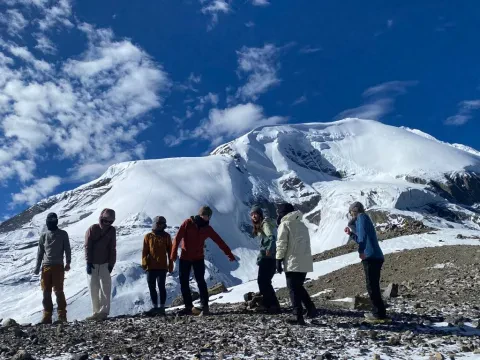
Just imagine trekking the Annapurna circuit in 8 days Sounds very hard isn't it ? But Roving Nepal Trek will make all of it possible with ease. Although the trek might be quick and hectic it can be done. Annapurna Circuit Trek is one of the most beautiful and toughest treks in the world. Mainly because of the uneven trails and major reduction in several days, this particular trek isn't everyone's cup of tea. Why is it 8 days Annapurna Circuit Trek Special? A lot of the readers might feel the 8-day Annapurna circuit trek isn't a possible thing but it can be done. The most special part about this short trek is enjoying the same beauty by saving time and money. In a time less than 10 days, trekkers will be able to view all the beautiful mountains, travel back to Kathmandu, and also interact with the local people. However, it is important to notice that this package is tough and physically demanding. How Hard Is 8 Day Annapurna Circuit Trek? Just to be very clear, the 8-day Annapurna circuit trek is a hard ask. You will have to be fit to complete the trek. Right from the very first day, we will be trekking for at least 6 hours a day. Anyone with little to no experience in high-altitude trekking aren't advised to join the trek. Meanwhile, Roving Nepal Trek can train anyone who can be part of this trekking journey. People with poor physical health can rather book the Annapurna Circuit trek which goes for 10-12 days. You will have enough time to cope and also acclimatize during that trek. Cost of 8 days Annapurna Circuit Trek A lot of the readers might think that a shorter trek means little cost compared to others. Well, that is true in some aspects but not all. For the 8-day Annapurna Circuit Trek, we generally have to be highly prepared in gear and also nutrition. The cost of that font will be higher and can rise gradually. However, the less time you spend on the trail the less money will be spent. The accurate cost of the 8-day Annapurna Circuit Trek is hard to predict as it depends on various factors. Meanwhile, interested trekkers can get in contact with Roving Nepal Trek and we will guide you through the itinerary, plans, and even the affordable cost rate for the short ABC trek. Is Solo Trek for 8-Day Annapurna Circuit Trek Possible? One of the highly asked questions at Roving Nepal Trek is whether a solo trek to the Annapurna circuit on an 8-day trip is possible or not. Well, it is possible but very risky to execute. According to the new rules as well, solo trekking in Nepal isn't allowed. As the trekker only has 8 days, the trekking itinerary must be prepared well. Not only that you also need to have an experienced guide. A guide who knows his way around the toughest trek in record time. With so many complications and variables to follow, a solo trek at the Annapurna circuit isn't advised at all. Things To Do For A Safe 8 Day Annapurna Circuit Trek A lot of the readers think that physical fitness is enough to get you through the Annapurna Circuit Trek. Just to be very clear it isn't. Although experience of trekking and physical fitness is the key there are other contributing factors too. 8 days to one of the toughest treks in the world is hard, so you need to be mentally strong too. Not only that try and acclimatize well to be safe from Acute Mountain Sickness issues which can make it tougher during the trek. More than that try and remain hydrated. A month before the actual 8-day Annapurna Circuit Trek try and have healthy food. Foods that will involve more of the green and less of fried items. This will create a better digestive system for and after the trek. Permits Required For Annapurna Circuit Trek If you are thinking there are some changes with the 8-day Annapurna circuit trek for a permit you are wrong. Trekkers would need to have the same permits they have for a longer trek. The first one is the Trekkers Information Management System (TIMS) card for the entrant into the home country. The second permit would be the Annapurna Conservation Area Project (ACAP) permit. ACAP permit will allow the trekker to enter the Annapurna Conservation Area and explore flora and fauna. All of these permits can be achieved by the Nepal Tourism Board.
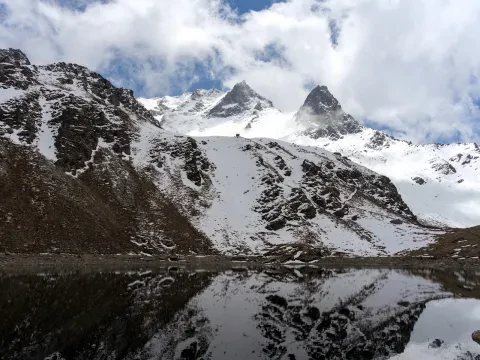
Embark on a journey to explore one of Nepal’s best-kept secrets in the heart of the Annapurna Region in the Himalayas. Experience ultimate tranquility and serenity while undertaking the new and relatively unknown Khopra Danda Trek with Khayer Lake in Nepal. The Khopra Danda Trek with Khayer Lake is a relatively new, but nonetheless world-class trek. It is also one of the more difficult treks in the region, and therefore recommended only for experienced trekkers and/or people with good levels of physical fitness. At an altitude of 3640 m, Khopra Ridge is the perfect destination for travelers to who want to get as close as possible to Dhaulagiri, Annapurna I, Annapurna South, Nilgiri, and other mountains in the Dhaulagiri and Annapurna Ranges. Khayer Lake, sitting at an altitude of 4,660, is a beautiful lake nestled in a small valley surrounded by enormous snow-capped peaks, including Annapurna South. When the weather is right, there are few places in Nepal as beautiful and tranquil as Khayer Lake.The Annapurna Region of Nepal is a true gem of the Himalayas. The Annapurna Region boasts a wide variety of trekking routes for the trekkers to enjoy. Some of the most famous trekking routes of the region include: the Annapurna Base Camp Trek, Ghorepani Poon Hill Trek, Mardi Himal Trek, and the Annapurna Circuit Trek. These trekking routes attract thousands of trekkers from across the globe every year, and as a result, they are typically very crowded. Some people hike to escape the crowds and experience the peace and tranquility that only untouched nature can offer. For those that want to escape the crowds and still experience the amazing views that the Annapurna Region has to offer, the Khopra Danda Trek is perfect!Where is the Trailhead of the Khopra Danda Trek?There are many possible trailheads for the Khopra Danda Trek. Some of the possible starting locations for the Khopra Danda Trek are Tatopani, Nayapul, Tikhedhunga, and Ghandruk. However, the most popular and easiest way to start the Khopra Danda trek is from Ghandruk. Ghandruk can be reached from Pokhara by jeep, with the driving time between two and two and a half hours.Khopra Danda Trek with Khayer Lake & Poon Hill ItineraryAlthough there are many articles written about the Khopra Danda Trek, the information from these articles can be confusing, and even contradictory. This is because the Khopra Danda trail is quite new and relatively untouched. Currently, there is no consensus for the best route to accomplish the Khopra Danda Trek, with treks having different start points, endpoints, and stops along the way. In order to come up with the best itinerary for our clients, Roving Nepal Treks sent its travel planners to the region in search of the best route. The itinerary offered by Roving Nepal Treks represents what we believe to be the best route, combining safe and comfortable trekking with the best views possible.The trekking starts from Ghandruk. This village is home to a large community of local Gurung people, and is a model cultural village of Nepal. Ghandruk village can be reached by bus or jeep from Pokhara. After leaving Ghandruk, you will traverse through lush, green forests before reaching Tadapani, your first sleeping location. Trekkers will continue to enjoy the serene, forest environment on their way to Dobato, the next sleeping location on the trek. Dobato is home to Mulde View Point, a relatively unknown location whose views are even more impressive than those found on the legendary Poon Hill. After watching sunrise from Mulde View Point, trekkers will walk along a mountain ridge with incredible views of the Annapurna Range and Fish Tail Mountain, before hiking down a hill towards Sistabong, encountering dense forests and impressive waterfalls along the way.After spending the night at Sistabong, trekkers will have a brief, but physically demanding morning of trekking uphill to reach Khopra, a small settlement on a narrow mountain ridge, 3,660 meters above sea level. When you stand on Khopra Hill, you will feel as if you are inside a postcard, with stunning views of the Dhaulagiri and Annapurna Ranges looming above you. The close-up views of these legendary mountain ranges make for a truly an awe-inspiring experience, demonstrating the true scale of the mighty Himalayas.The following morning you will hike to Khayer Lake, a small lake hidden within the Annapurna Range, surrounded on all sides by beautiful mountain scenery. On a clear day with little wind, the water from this lake is as smooth as glass, glowing blue and white from the reflection of the sky and mountains above. This day will be the hardest day of the trek, with anywhere from 8-11 hours of hiking and over 1,000 meters of elevation gain on rocky, steep trails. But the difficulty of this day's trek is proportionate to the views that you will see along the way. Stunning views of Annapurna I, Annapurna South, and Nilgiri, along with panoramic views of the Dhaulagiri Range, will be ever present throughout your trek, tempting you to stop for more pictures than you probably need! Next, you will walk down the same hill that you came up the day before, but this time you will instead head towards Swanta, a picturesque village dotted with small, hillside farms. On the way to Swanta you will walk along mountain ridges and later through dense forests, passing mountain streams and waterfalls, with views of the mountains on all sides. You will spend the night in Swanta, enjoying the beautiful views and vibrant local community.As with the starting point of the trek, there are different places where the Khopra Danda Trek can end. Some trekkers choose to end the trek in Banthani after spending a night in Ghodepani and visiting Poon Hill. But having already seen Mulde View Point on this trek, some trekkers don't want to visit Poon Hill, which might appear to some a more crowded and less impressive version of Mulde. For these trekkers, we recommend ending the trek at Tatopani, a village that is home to famous hot springs which provide the perfect location to relax and recuperate after your long and arduous trek. Khopra Danda / Khayer Lake Trek DifficultyAlthough the difficulty of the trek until Khopra is easy to moderate, the trek to Khayer Lake is difficult. You must be an experienced trekker or possess a good level of physical fitness for this trek, as the walking distance each day is substantial and there are long steep, ascents and descents along the way, especially on the trek to Khayer Lake. The trail is narrow and and steep in some sections. The maximum altitude of 4,660m is well within the altitude sickness zone. Therefore, proper planning and a reliable trekking companion are highly recommended. Don’t underestimate this trekking route, especially the trek to Khayer Lake.Can I do Khopra Danda Trek and Poon Hill Trek in one single Trip?Yes, you can do Khopra Danda Trek and Poon Hill Trek in one single trip. Roving Nepal Treks offers a trekking package that goes to Ghorepani instead of Tatopani after overnighting in Swanta. Ghorepani is a hill station which is the main town from which trekkers hike to Poon Hill. After sleeping in Ghorepani you can take the 45 minute walk up to Poon hill to see the sunrise before trekking down to Ulleri or Tikhedhungga to catch a jeep back to Pokhara. Trekkers who go opt to include a visit to Ghorepani can also can also extend the trek to include Mohare Danda.Are the Khopra Danda Trek, Khopra Hill Trek, Khopra Ridge Trek, Khayer Lake Trek, and Khopra Khayer Lake Trek the same?The Khopra Danda Trek has many names, but for the most part, they all mean the same thing! Danda means "hill" in the Nepali language, so saying Khopra Danda and Khopra Hill is saying the same thing, only in a different language. The small village of Khopra is technically not on a hill, but rather a mountain ridge that leads to the lower reaches of the Annapurna Range. In fact, there are hills with higher elevations on either side of Khopra. Whether you hear someone say Khopra Hill, Khopra Danda, or Khopra Ridge, just know that these refer to the same place and the same trek.Khayer Lake is a picturesque mountain lake above Khopra, at an altitude of 4,660 meters. Some Khopra Danda Trek itineraries, such as this one, include a visit to this lake. The reason why some itineraries skip Khayer Lake is because the hike to Khayer Lake is considerably more difficult than any other day on the Khopra Danda Trek. The trek to Khayer Lake can take anywhere from 8-11 hours, with about 1,000 meters of elevation gain along the way. The Khayer Lake Trek is recommended only for experienced trekkers or people in good physical condition. If you decide that you are not interested in seeing Khayer Lake as part of your Khopra Danda Trek, Roving Nepal Treks offers other treks which do not include it in the itinerary. Contact the travel planners of Roving Nepal Trek and plan your trek today!
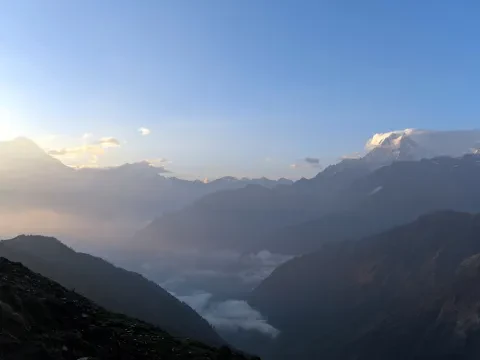
Embark on a journey to explore one of Nepal’s best-kept secrets in the heart of the Annapurna Region in the Himalayas. Experience ultimate tranquility and serenity while undertaking the new and relatively unknown Khopra Danda Trek with Poon Hill in Nepal. Khopra Danda is a great trek for nearly every kind of hiker, from novices to even the most seasoned hikers. At an altitude of 3640 m, the Khopra Ridge is the perfect destination for travelers to enjoy close-up views of mountains such as Dhaulagiri, Annapurna I, Annapurna South, Nilgiri, and countless other mountains in the Dhaulagiri and Annapurna Ranges.The Annapurna Region of Nepal is a true gem of the Himalayas. The Annapurna Region boasts a wide variety of trekking routes for the trekkers to enjoy. Some of the most famous trekking routes of the region include: the Annapurna Base Camp Trek, Ghorepani Poon Hill Trek, the Mardi Himal Trek, and the Annapurna Circuit Trek. These trekking routes attract thousands of trekkers from across the globe every year, and as a result, they are always crowded. Some people hike to escape the crowds and experience the peace and tranquility that only untouched nature can offer. For those that want to escape the crowds and still experience the amazing views that the Annapurna Region has to offer, the Khopra Hill Trek is perfect! In addition, this trekking package also includes a visit to the world-famous Poon Hill.Where is the Trailhead of the Khopra Danda Trek?There are many possible trailheads for the Khopra Danda Trek. Some of the possible starting locations for the Khopra Danda Trek are Tatopani, Nayapul, Tikhedhunga, and Ghandruk. However, the most popular and easiest way to start the Khopra Danda trek is from Ghandruk. Ghandruk can be reached from Pokhara by jeep, with the driving time between two and two and a half hours.Khopra Danda Trek ItineraryAlthough there are many articles written about the Khopra Danda Trek, the information from these articles can be confusing, and even contradictory. This is because the Khopra Danda trail is quite new and relatively untouched. Currently, there is no consensus for the best route to accomplish the Khopra Danda Trek, with treks having different start points, endpoints, and stops along the way. In order to come up with the best itinerary for our clients, Roving Nepal Treks sent its travel planners to the region in search of the best route. The itinerary offered by Roving Nepal Treks represents what we believe to be the best route, combining safe and comfortable trekking with the best views possible.The trekking starts from Ghandruk. This village is home to a large community of local Gurung people, and is a model cultural village of Nepal. Ghandruk village can be reached by bus or jeep from Pokhara. After leaving Ghandruk, you will traverse through lush, green forests before reaching Tadapani, your first sleeping location. Trekkers will continue to enjoy the serene, forest environment on their way to Dobato, the next sleeping location on the trek. Dobato is home to Mulde View Point, a relatively unknown location whose views are even more impressive than those found on the legendary Poon Hill. After watching sunrise from Mulde View Point, you will walk along a mountain ridge with incredible views of the Annapurna Range and Fish Tail Mountain, before hiking downhill towards Sistabong, encountering dense forests and impressive waterfalls along the way.After spending the night at Sistabong, you will have a brief, but physically demanding morning of trekking uphill to reach Khopra, a small settlement on a narrow mountain ridge, 3,660 meters above sea level. When you stand on Khopra Hill, you will feel as if you are inside a postcard, with stunning views of the Dhaulagiri and Annapurna Ranges looming above you. The close-up views of these legendary mountain ranges make for a truly an awe-inspiring experience, demonstrating the true scale of the mighty Himalayas. The following morning you will walk down the same hill that you came up the day before, but this time you will instead head towards Swanta, a picturesque village dotted with small, hillside farms. On the way to Swanta you will walk along mountain ridges and later through dense forests, passing mountain streams and waterfalls, with views of the mountains on all sides. You will spend the night in Swanta, enjoying the beautiful views and vibrant local community.As with the starting point of the trek, there are different places where the Khopra Danda Trek can end. Some trekkers choose to end the trek in Tatopani, a village famous for its hot springs and religious significance. However, this itinerary instead heads from Swanta to Ghodepani, the nearest village to Poon Hill. After waking up early and taking a 45 minute walk uphill, you will be met with one of the most famous views in Nepal, the view of sunrise from Poon Hill. After soaking up the views, you will walk downhill towards Ulleri, where you can catch a jeep ride back to Pokhara. Khopra Danda Trek DifficultyThe difficulty of the Khopra Danda Trek with Poon Hill is easy to moderate. You must possess a decent level of physical fitness, as the walking distance each day is substantial and there are long steep, ascents and descents along the way. The trail is narrow and and steep in some sections. The maximum altitude reached on this trek is firmly within in the altitude sickness zone. Therefore, proper planning and a reliable trekking companion are highly recommended. Don’t underestimate this trekking route even if it is suitable for both seasoned hikers and beginners.Do I have to do Khopra Danda and Poon Hill in the same trek?No, your trek to Khopra Danda doesn't have to include a trip to Poon Hill. In fact, we have just as many hikers who decide to skip Poon Hill as we do who opt for a visit. Roving Nepal Treks also offers a trekking package that goes to Tatopani instead of Ghodepani after overnighting in Swanta. Tatopani is a small village overlooking a river, nestled between mountains. Tatopani is an import recreational and religious destination in Nepal, as it is home to world-famous hot springs. These hot springs are a perfect way to relax and recuperate after a long and arduous trek. Whichever you choose, Roving Nepal Treks is here to help. Are the Khopra Danda Trek, Khopra Hill Trek, Khopra Ridge Trek, Khayer Lake Trek, and Khopra Khayer Lake Trek the same?The Khopra Danda Trek has many names, but they mean the same thing! Danda means "hill" in the Nepali language, so saying Khopra Danda and Khopra Hill is saying the same thing, only in a different language. The small village of Khopra is technically not a hill, but rather a mountain ridge that leads to the lower reaches of the Annapurna Range, and in fact, there are hills with higher elevations on either side of Khopra. Whether you hear someone say Khopra Hill, Khopra Danda, or Khopra Ridge, just know that these refer to the same place and the same trek.Khayer Lake is a picturesque mountain lake above Khopra, at an altitude of 4,660 meters. Some Khopra Danda Trek itineraries include a visit to this lake, but others, like this one, do not. The reason why some itineraries skip Khayer Lake is because the hike to Khayer Lake is considerably more difficult than any other day on the Khopra Danda Trek. The trek to Khayer Lake can take anywhere from 8-11 hours, with approximately 1,000 meters of elevation gain along the way. The Khayer Lake Trek is recommended only for experienced trekkers or people in good physical condition. If you are interested in seeing Khayer Lake as part of your Khopra Danda Trek, Roving Nepal Treks offers other treks which do include it in the itinerary. Contact the travel planners of Roving Nepal Trek and plan your trek today!
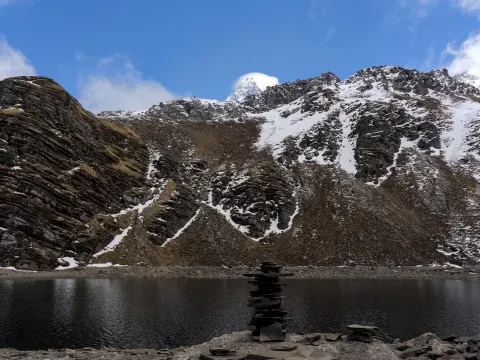
Embark on a journey to explore one of Nepal’s best-kept secrets in the heart of the Annapurna Region in the Himalayas. Experience ultimate tranquility and serenity while undertaking the new and relatively unknown Khopra Danda Trek with Khayer Lake & Poon Hill in Nepal. The Khopra Danda Trek with Khayer Lake & Poon is a relatively new, but nonetheless world-class trek. It is also one of the more difficult treks in the region, and therefore recommended only for experienced trekkers and/or people with good levels of physical fitness. At an altitude of 3640 m, Khopra Ridge is the perfect destination for travelers to who want to get as close as possible to Dhaulagiri, Annapurna I, Annapurna South, Nilgiri, and other mountains in the Dhaulagiri and Annapurna Ranges. Khayer Lake, sitting at an altitude of 4,660, is a beautiful lake nestled in a small valley surrounded by enormous snow-capped peaks, including Annapurna South. When the weather is right, there are few places in Nepal as beautiful and tranquil as Khayer Lake.The Annapurna Region of Nepal is a true gem of the Himalayas. The Annapurna Region boasts a wide variety of trekking routes for the trekkers to enjoy. Some of the most famous trekking routes of the region include: the Annapurna Base Camp Trek, Ghorepani Poon Hill Trek, Mardi Himal Trek, and the Annapurna Circuit Trek. These trekking routes attract thousands of trekkers from across the globe every year, and as a result, they are typically very crowded. Some people hike to escape the crowds and experience the peace and tranquility that only untouched nature can offer. For those that want to escape the crowds and still experience the amazing views that the Annapurna Region has to offer, the Khopra Danda Trek is perfect!Where is the Trailhead of the Khopra Danda Trek?There are many possible trailheads for the Khopra Danda Trek. Some of the possible starting locations for the Khopra Danda Trek are Tatopani, Nayapul, Tikhedhunga, and Ghandruk. However, the most popular and easiest way to start the Khopra Danda trek is from Ghandruk. Ghandruk can be reached from Pokhara by jeep, with the driving time between two and two and a half hours.Khopra Danda Trek with Khayer Lake & Poon Hill ItineraryAlthough there are many articles written about the Khopra Danda Trek, the information from these articles can be confusing, and even contradictory. This is because the Khopra Danda trail is quite new and relatively untouched. Currently, there is no consensus for the best route to accomplish the Khopra Danda Trek, with treks having different start points, endpoints, and stops along the way. In order to come up with the best itinerary for our clients, Roving Nepal Treks sent its travel planners to the region in search of the best route. The itinerary offered by Roving Nepal Treks represents what we believe to be the best route, combining safe and comfortable trekking with the best views possible.The trekking starts from Ghandruk. This village is home to a large community of local Gurung people, and is a model cultural village of Nepal. Ghandruk village can be reached by bus or jeep from Pokhara. After leaving Ghandruk, you will traverse through lush, green forests before reaching Tadapani, your first sleeping location. Trekkers will continue to enjoy the serene, forest environment on their way to Dobato, the next sleeping location on the trek. Dobato is home to Mulde View Point, a relatively unknown location whose views are even more impressive than those found on the legendary Poon Hill. After watching sunrise from Mulde View Point, trekkers will walk along a mountain ridge with incredible views of the Annapurna Range and Fish Tail Mountain, before hiking down a hill towards Sistabong, encountering dense forests and impressive waterfalls along the way.After spending the night at Sistabong, trekkers will have a brief, but physically demanding morning of trekking uphill to reach Khopra, a small settlement on a narrow mountain ridge, 3,660 meters above sea level. When you stand on Khopra Hill, you will feel as if you are inside a postcard, with stunning views of the Dhaulagiri and Annapurna Ranges looming above you. The close-up views of these legendary mountain ranges make for a truly an awe-inspiring experience, demonstrating the true scale of the mighty Himalayas.The following morning you will hike to Khayer Lake, a small lake hidden within the Annapurna Range, surrounded on all sides by beautiful mountain scenery. On a clear day with little wind, the water from this lake is as smooth as glass, glowing blue and white from the reflection of the sky and mountains above. This day will be the hardest day of the trek, with anywhere from 8-11 hours of hiking and over 1,000 meters of elevation gain on rocky, steep trails. But the difficulty of this day's trek is proportionate to the views that you will see along the way. Stunning views of Annapurna I, Annapurna South, and Nilgiri, along with panoramic views of the Dhaulagiri Range, will be ever present throughout your trek, tempting you to stop for more pictures than you probably need! Next, you will walk down the same hill that you came up the day before, but this time you will instead head towards Swanta, a picturesque village dotted with small, hillside farms. On the way to Swanta you will walk along mountain ridges and later through dense forests, passing mountain streams and waterfalls, with views of the mountains on all sides. You will spend the night in Swanta, enjoying the beautiful views and vibrant local community.As with the starting point of the trek, there are different places where the Khopra Danda Trek can end. Some trekkers choose to end the trek in Tatopani, a village famous for its hot springs and religious significance. However, this itinerary instead heads from Swanta to Ghodepani, the nearest village to Poon Hill. After waking up early and taking a 45 minute walk uphill, you will be met with one of the most famous views in Nepal, the view of sunrise from Poon Hill. After soaking up the views, you will walk downhill towards Ulleri, where you can catch a jeep ride back to Pokhara.Khopra Danda Trek with Khayer Lake & Poon Hill DifficultyAlthough the difficulty of the trek until Khopra is easy to moderate, the trek to Khayer Lake is difficult. You must be an experienced trekker or possess a good level of physical fitness for this trek, as the walking distance each day is substantial and there are long steep, ascents and descents along the way, especially on the trek to Khayer Lake. The trail is narrow and and steep in some sections. The maximum altitude of 4,660m is well within the altitude sickness zone. Therefore, proper planning and a reliable trekking companion are highly recommended. Don’t underestimate this trekking route, especially the trek to Khayer Lake.Do I have to do Khopra Danda and Poon Hill in the same trek?No, your trek to Khopra Danda doesn't have to include a trip to Poon Hill. In fact, we have just as many hikers who decide to skip Poon Hill as we do who opt for a visit. Roving Nepal Treks also offers a trekking package that goes to Tatopani instead of Ghodepani after overnighting in Swanta. Tatopani is a small village overlooking a river, nestled between mountains. Tatopani is an import recreational and religious destination in Nepal, as it is home to world-famous hot springs. These hot springs are a perfect way to relax and recuperate after a long and arduous trek. Whichever you choose, Roving Nepal Treks is here to help.Are the Khopra Danda Trek, Khopra Hill Trek, Khopra Ridge Trek, Khayer Lake Trek, and Khopra Khayer Lake Trek the same?The Khopra Danda Trek has many names, but for the most part, they all mean the same thing! Danda means "hill" in the Nepali language, so saying Khopra Danda and Khopra Hill is saying the same thing, only in a different language. The small village of Khopra is technically not on a hill, but rather a mountain ridge that leads to the lower reaches of the Annapurna Range. In fact, there are hills with higher elevations on either side of Khopra. Whether you hear someone say Khopra Hill, Khopra Danda, or Khopra Ridge, just know that these refer to the same place and the same trek.Khayer Lake is a picturesque mountain lake above Khopra, at an altitude of 4,660 meters. Some Khopra Danda Trek itineraries, such as this one, include a visit to this lake. The reason why some itineraries skip Khayer Lake is because the hike to Khayer Lake is considerably more difficult than any other day on the Khopra Danda Trek. The trek to Khayer Lake can take anywhere from 8-11 hours, with about 1,000 meters of elevation gain along the way. The Khayer Lake Trek is recommended only for experienced trekkers or people in good physical condition. If you decide that you are not interested in seeing Khayer Lake as part of your Khopra Danda Trek, Roving Nepal Treks offers other treks which do not include it in the itinerary. Contact the travel planners of Roving Nepal Trek and plan your trek today!
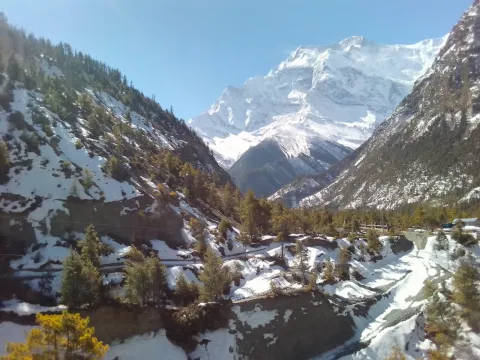
Annapurna Circuit Trek with Tilicho Lake – The Ultimate Himalayan AdventureThe Annapurna Circuit Trek with Tilicho Lake is one of Nepal's most rewarding trekking experiences, combining the legendary Annapurna Circuit with a visit to the breathtaking Tilicho Lake, one of the world's highest lakes. This remarkable journey takes you through diverse landscapes, traditional mountain villages, lush forests, alpine meadows, dramatic river valleys, and the spectacular Thorong La Pass (5,416 m), offering a perfect blend of natural beauty, cultural immersion, and high-altitude adventure.Unlike many treks that focus on a single destination, the Annapurna Circuit showcases Nepal's incredible geographical diversity. Within a few days, trekkers transition from subtropical forests and terraced farmland to rugged alpine terrain and snow-covered mountain passes. The addition of Tilicho Lake makes the journey even more extraordinary, rewarding trekkers with stunning turquoise waters surrounded by towering Himalayan peaks.Whether you are an experienced trekker or a physically fit adventurer seeking your first Himalayan challenge, the Annapurna Circuit Trek with Tilicho Lake offers unforgettable scenery, authentic local culture, and lifelong memories.Why Choose the Annapurna Circuit Trek with Tilicho Lake?The Annapurna Circuit has long been recognized as one of the world's finest trekking routes. Adding Tilicho Lake transforms this classic trek into an even more spectacular adventure.This trek allows you to experience:One of the highest trekking passes in the world – Thorong La Pass (5,416 m)Tilicho Lake (4,919 m), one of the world's highest alpine lakesStunning views of Annapurna, Dhaulagiri, Manaslu, Gangapurna, Tilicho Peak, and NilgiriRich Tibetan-influenced culture in Manang and MustangDiverse ecosystems ranging from subtropical forests to alpine desertsBeautiful monasteries, chortens, mani walls, and prayer flagsComfortable teahouse accommodation throughout the routeNatural hot springs at Tatopani (depending on itinerary)The sacred pilgrimage site of Muktinath TempleAuthentic Himalayan hospitality from local communitiesUnlike shorter treks, the Annapurna Circuit offers an ever-changing landscape, ensuring that every trekking day feels different from the last.Trek OverviewThe adventure begins with a scenic drive from Kathmandu to the trailhead before following the Marsyangdi River valley through charming Gurung and Tibetan-influenced villages. As you ascend gradually, you'll pass waterfalls, suspension bridges, pine forests, and terraced fields before reaching the beautiful village of Manang.A rest day in Manang allows for proper acclimatization while offering opportunities for short hikes to nearby viewpoints. From here, the route diverts toward the spectacular Tilicho Lake. The trail becomes more rugged and dramatic as you cross landslide-prone sections and rocky cliffs before reaching Tilicho Base Camp.An early morning hike brings you to the magnificent Tilicho Lake, where crystal-clear turquoise waters reflect the surrounding snow-covered peaks. Standing beside one of the highest alpine lakes in the world is a truly unforgettable experience.After returning to the main Annapurna Circuit, the journey continues toward Yak Kharka and Thorong Phedi before crossing the legendary Thorong La Pass. This challenging yet rewarding day offers panoramic views of the Annapurna and Dhaulagiri mountain ranges.Descending from the pass, you'll arrive at the sacred pilgrimage site of Muktinath, revered by both Hindus and Buddhists. The trail then continues through the dramatic Kali Gandaki Valley before concluding with a scenic drive or flight, depending on your itinerary.Major Highlights of the TrekTilicho Lake (4,919 m)Tilicho Lake is undoubtedly one of Nepal's most spectacular alpine lakes. Nestled beneath the towering cliffs of Tilicho Peak and surrounded by rugged Himalayan landscapes, the lake's vivid blue waters create an unforgettable contrast against snow-covered mountains.Reaching Tilicho Lake requires additional effort compared to the standard Annapurna Circuit, but the reward is one of Nepal's most iconic high-altitude destinations.Thorong La Pass (5,416 m)Crossing Thorong La Pass is the highest point of the trek and one of the greatest achievements for trekkers in Nepal.The ascent begins before sunrise, allowing trekkers to reach the pass before afternoon winds develop. Colorful prayer flags mark the summit, while breathtaking panoramic views stretch across the Annapurna and Dhaulagiri Himalayan ranges.Successfully crossing Thorong La is a memorable milestone and one of the defining moments of the Annapurna Circuit.Manang ValleyManang is one of the most fascinating villages in the Himalayas. Surrounded by snow-capped mountains, it serves as an essential acclimatization stop before heading to higher elevations.Visitors can explore ancient monasteries, bakeries, museums, and traditional stone villages while enjoying magnificent mountain views.Popular acclimatization hikes include:Gangapurna LakeIce LakeChongkor ViewpointPraken GompaThese hikes help improve acclimatization while providing spectacular scenery.Muktinath TempleLocated at an elevation of 3,800 meters, Muktinath is one of Nepal's most sacred pilgrimage destinations.The temple attracts thousands of Hindu and Buddhist pilgrims every year who come to bathe beneath the 108 water spouts and worship the eternal natural flame.Even for non-religious visitors, Muktinath offers a peaceful atmosphere and unique cultural experience.Mountain Views Throughout the TrekOne of the greatest advantages of the Annapurna Circuit Trek with Tilicho Lake is the incredible variety of mountain panoramas.Depending on weather conditions, trekkers can enjoy views of:Annapurna IIAnnapurna IIIAnnapurna IVAnnapurna IGangapurnaTilicho PeakPisang PeakChulu EastChulu WestManasluDhaulagiriNilgiriTukuche PeakLamjung HimalEvery stage of the trek reveals new perspectives of these magnificent Himalayan giants.Culture and Local CommunitiesThe Annapurna region is home to several ethnic communities, each with its own traditions, architecture, language, and way of life.Lower elevations are predominantly inhabited by Gurung and Magar communities, while the higher villages around Manang and Mustang reflect strong Tibetan Buddhist influences.Along the trail, trekkers will encounter:Ancient monasteriesMani wallsPrayer wheelsColorful prayer flagsTraditional stone housesBuddhist chortensInteracting with local families and staying in teahouses provides an authentic cultural experience that is as memorable as the mountain scenery itself.Flora and FaunaThe Annapurna Conservation Area is Nepal's largest protected conservation area and supports an incredible diversity of ecosystems.During the trek, you'll pass through:Rhododendron forestsPine forestsJuniper woodlandsAlpine meadowsHigh-altitude desertsGlacial valleysWildlife occasionally spotted includes:Himalayan TharBlue SheepMusk DeerHimalayan Monal (Nepal's national bird)Griffon VulturesSnow PigeonsVarious Himalayan eaglesSpring is particularly beautiful when rhododendron forests bloom with vibrant colors.Trek DifficultyThe Annapurna Circuit Trek with Tilicho Lake is considered a moderately challenging to challenging trek.While no technical climbing experience is required, trekkers should be prepared for long walking days, steep ascents, rocky terrain, and high-altitude conditions.The most demanding sections include:Tilicho Base Camp to Tilicho LakeCrossing Thorong La PassHigh-altitude trekking above 4,500 metersA good level of physical fitness and proper acclimatization are essential for a safe and enjoyable journey.Best Time for the Annapurna Circuit Trek with Tilicho LakeThe best seasons are spring (March to May) and autumn (September to November).SpringSpring offers blooming rhododendron forests, stable weather, moderate temperatures, and excellent mountain visibility. This season is perfect for photographers and nature lovers.AutumnAutumn is the most popular trekking season due to its crystal-clear skies, dry trails, and spectacular mountain views after the monsoon.WinterWinter treks are possible, but heavy snowfall may temporarily close Thorong La Pass, making itinerary changes necessary.MonsoonThe summer monsoon brings rain to the lower regions, muddy trails, and limited mountain visibility. However, the Manang and Mustang areas receive comparatively less rainfall due to the Himalayan rain shadow.Accommodation During the TrekThe Annapurna Circuit Trek with Tilicho Lake follows a well-established teahouse route.Most accommodations provide:Twin-sharing roomsComfortable beds with mattressesBlanketsShared bathroomsDining halls with wood or gas heatingHot showers (additional charge in many villages)Charging facilities (available for an extra fee in higher elevations)Wi-Fi in many locations (often paid)Although accommodations become more basic at higher elevations, they remain comfortable and welcoming.Meals on the TrekTeahouses serve a wide variety of freshly prepared meals.Popular menu items include:Dal Bhat (traditional Nepali meal)Fried riceNoodlesPastaPizzaMomosTibetan breadPancakesEggsSoupsPotatoesSeasonal vegetablesTeaCoffeeHot chocolateDal Bhat is particularly recommended because it provides balanced nutrition and unlimited refills in many teahouses.A Journey You'll Never ForgetThe Annapurna Circuit Trek with Tilicho Lake is far more than a mountain hike—it is a complete Himalayan experience. Every day presents new landscapes, fascinating cultures, dramatic mountain scenery, and unforgettable challenges. From the tranquil beauty of Tilicho Lake to the exhilarating crossing of Thorong La Pass and the spiritual atmosphere of Muktinath, this trek offers countless moments that remain with you long after the journey ends.If you're looking for a classic Nepal trekking adventure that combines breathtaking natural beauty, rich cultural heritage, and the thrill of high-altitude exploration, the Annapurna Circuit Trek with Tilicho Lake stands among the finest trekking experiences in the world.
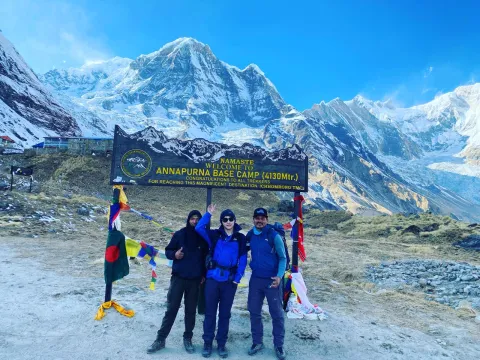
12 Days Annapurna Base Camp Trek with Kathmandu Pokhara Tour: Experience the Best of Nepal in 12 DaysThe 12 Days Annapurna Base Camp Trek with Kathmandu Pokhara Tour is a perfect blend of adventure, culture, and natural beauty, offering travelers the opportunity to experience Nepal's most iconic destinations in one unforgettable journey. This carefully designed itinerary combines the legendary Annapurna Base Camp Trek with guided sightseeing tours of Kathmandu Valley and Pokhara, allowing you to explore ancient UNESCO World Heritage Sites, serene lakes, charming mountain villages, and the breathtaking Himalayan landscape.Whether you're seeking a thrilling trekking adventure, a cultural holiday, or a well-rounded Nepal experience, this package offers the best of all worlds. From exploring centuries-old temples in Kathmandu to enjoying the tranquil beauty of Pokhara and standing beneath the towering peaks of the Annapurna Sanctuary, every day of this trip is filled with memorable experiences.The Annapurna Base Camp Trek is one of Nepal's most popular trekking routes, renowned for its spectacular mountain scenery, traditional Gurung villages, rhododendron forests, cascading waterfalls, and welcoming teahouse hospitality. Combined with sightseeing in Kathmandu and Pokhara, this 12-day package is ideal for travelers who want to experience Nepal's rich culture as well as its world-famous trekking trails.Why Choose This Package?Nepal offers incredible diversity, from ancient cultural heritage to some of the highest mountains on Earth. This package has been thoughtfully designed for travelers who wish to experience both without requiring a lengthy vacation.Instead of focusing solely on trekking, this itinerary allows you to:Discover Nepal's rich history and architecture in Kathmandu.Experience the peaceful atmosphere and scenic attractions of Pokhara.Complete the famous Annapurna Base Camp Trek.Enjoy a balance of sightseeing, adventure, and relaxation.Experience local traditions, cuisine, and mountain hospitality.Travel with experienced guides and well-planned logistics.It is an ideal choice for couples, solo travelers, families with older children, and small groups looking for a complete Nepal holiday.Trip OverviewYour adventure begins in Kathmandu, Nepal's vibrant capital city, where centuries-old temples, bustling markets, and UNESCO World Heritage Sites provide an introduction to the country's rich cultural heritage. During your guided sightseeing tour, you'll visit some of Kathmandu Valley's most famous landmarks before preparing for your Himalayan adventure.The journey then continues to Pokhara, Nepal's adventure capital. Nestled beside the beautiful Phewa Lake and surrounded by the Annapurna Himalayas, Pokhara offers a peaceful contrast to the lively streets of Kathmandu. Before beginning the trek, you'll explore some of the city's most popular attractions and enjoy magnificent mountain views.From Pokhara, you'll travel to the trekking trailhead and begin the Annapurna Base Camp Trek. The trail winds through terraced farmlands, bamboo forests, rhododendron woodlands, cascading waterfalls, and picturesque Gurung villages. As you gain elevation, the scenery transforms dramatically, eventually leading into the spectacular Annapurna Sanctuary.The highlight of the trek is reaching Annapurna Base Camp (4,130 m), where you're surrounded by a breathtaking amphitheater of towering Himalayan peaks, including Annapurna I (8,091 m), Machhapuchhre (Fishtail), Hiunchuli, Annapurna South, and Gangapurna.After enjoying this unforgettable mountain experience, you'll descend through charming villages before returning to Pokhara and concluding your journey.Kathmandu Valley TourKathmandu is the cultural and historical heart of Nepal. With a history spanning more than two thousand years, the valley is home to magnificent temples, ancient royal palaces, colorful markets, and vibrant festivals.Depending on your itinerary, your sightseeing tour may include some of Nepal's most famous UNESCO World Heritage Sites, such as:Kathmandu Durbar SquareSwayambhunath Stupa (Monkey Temple)Pashupatinath TempleBoudhanath StupaThese remarkable landmarks showcase Nepal's unique blend of Hindu and Buddhist traditions while offering fascinating insights into the country's rich history and architecture.Walking through Kathmandu's narrow streets, visitors can experience traditional craftsmanship, local cuisine, bustling bazaars, and centuries-old cultural traditions that continue to thrive today.Pokhara Valley TourPokhara is widely regarded as Nepal's most beautiful city. Located approximately 200 kilometers west of Kathmandu, it is famous for its tranquil lakes, stunning mountain scenery, and relaxed atmosphere.Popular attractions in Pokhara include:Phewa LakeDavis FallsGupteshwor Mahadev CaveWorld Peace PagodaBindhyabasini TempleInternational Mountain MuseumSeti GorgeThe reflection of Machhapuchhre (Fishtail Mountain) on the calm waters of Phewa Lake is one of Nepal's most iconic views.Pokhara also serves as the gateway to the Annapurna region and is the starting point for many of Nepal's most famous trekking adventures.Annapurna Base Camp TrekThe Annapurna Base Camp Trek is one of the most rewarding trekking routes in the Himalayas. It offers incredible mountain scenery while remaining accessible to trekkers with a reasonable level of fitness.The trail passes through:Traditional Gurung villagesStone staircasesBamboo forestsRhododendron forestsAlpine landscapesGlacial valleysEvery day brings changing scenery and spectacular mountain views.As you approach the Annapurna Sanctuary, towering peaks gradually surround you until you finally arrive at Annapurna Base Camp, one of the most spectacular viewpoints in the Himalayas.Standing beneath Annapurna I, the world's tenth-highest mountain, is an unforgettable experience that draws trekkers from around the globe.Mountains You'll SeeThroughout the trek, weather permitting, you'll enjoy magnificent views of:Annapurna IAnnapurna SouthMachhapuchhre (Fishtail)HiunchuliGangapurnaAnnapurna IIITent PeakBaraha ShikharNilgiriDhaulagiri (from selected viewpoints)The panoramic scenery changes continuously as the trail ascends deeper into the Annapurna Sanctuary.Local CultureOne of the most rewarding aspects of this trek is the opportunity to experience the culture of the Gurung and Magar communities, who have lived in the Annapurna region for generations.Along the trail, you'll encounter:Traditional stone housesAncient monasteriesPrayer flagsLocal farming communitiesWarm hospitalityAuthentic mountain cuisineStaying in locally operated teahouses provides meaningful cultural interactions while supporting the livelihoods of mountain communities.Flora and WildlifeThe Annapurna Conservation Area is Nepal's largest protected conservation region and boasts exceptional biodiversity.Depending on the season, you'll trek through:Rhododendron forestsBamboo grovesOak forestsAlpine meadowsMoss-covered trailsWildlife occasionally spotted includes:Himalayan MonalLangur monkeysHimalayan TharMusk DeerVarious species of eagles and vulturesSpring transforms the forests into a colorful display as rhododendrons bloom across the hillsides.Trek Difficulty of ABC TrekThe Annapurna Base Camp Trek is considered a moderate trek, making it suitable for first-time trekkers with good physical fitness as well as experienced hikers.Daily walks generally range from 5 to 7 hours, with gradual altitude gain allowing for proper acclimatization.Although no technical climbing is required, trekkers should prepare for:Stone staircasesUphill and downhill trailsVariable mountain weatherHigh altitude reaching 4,130 metersA positive attitude, moderate fitness, and proper preparation will greatly enhance your trekking experience.Best Time to VisitThe best seasons for the 12 Days Annapurna Base Camp Trek with Kathmandu Pokhara Tour are:Spring (March to May)Spring offers blooming rhododendron forests, comfortable temperatures, clear mountain views, and colorful landscapes, making it one of the most popular trekking seasons.Autumn (September to November)Autumn is considered the ideal trekking season due to stable weather, dry trails, and crystal-clear views of the Himalayas after the monsoon.Winter (December to February)Winter offers peaceful trails and stunning snow-covered landscapes. While temperatures are colder, the Annapurna Base Camp Trek remains possible with appropriate clothing and preparation.Monsoon (June to August)The monsoon season brings lush greenery and fewer crowds, although rain, muddy trails, and occasional transportation delays should be expected.Accommodation & MealsDuring your stay in Kathmandu and Pokhara, you'll typically be accommodated in comfortable tourist-standard hotels with modern amenities.Throughout the trek, accommodation is provided in traditional teahouses offering clean twin-sharing rooms and warm hospitality.Meals during the trek include a variety of local and international dishes, such as:Dal BhatFried riceNoodlesPastaSoupsMomosTibetan breadEggsPancakesSeasonal vegetablesTea and coffeeFreshly prepared meals provide the energy needed for trekking while allowing you to experience authentic Himalayan cuisine.An Unforgettable Nepal Experience: ABC Trek with Kathmandu Pokhara TourThe 12 Days Annapurna Base Camp Trek with Kathmandu Pokhara Tour combines Nepal's greatest highlights into one seamless adventure. From the cultural treasures of Kathmandu and the lakeside beauty of Pokhara to the awe-inspiring landscapes of the Annapurna Sanctuary, this journey offers an unforgettable mix of heritage, nature, and adventure.Whether you are visiting Nepal for the first time or returning to explore more of its incredible beauty, this carefully crafted itinerary promises lasting memories, breathtaking scenery, and authentic cultural experiences that will stay with you long after your journey ends.
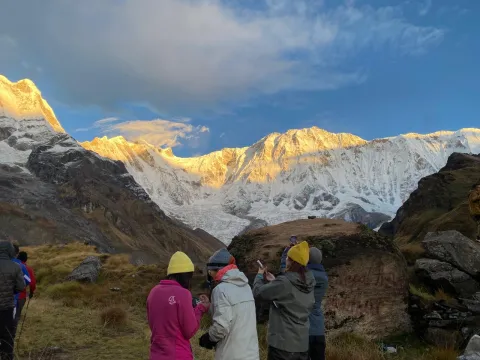
The 10 Days Annapurna Base Camp Trek is a classic Himalayan adventure that takes you from the vibrant streets of Kathmandu to the heart of the Annapurna Sanctuary. This carefully paced itinerary combines scenic road journeys, beautiful mountain trails, traditional villages, lush forests, and spectacular Himalayan views before reaching Annapurna Base Camp at 4,130 meters.The 10-Day Annapurna Base Camp (ABC) trek is widely regarded as one of the most rewarding high-altitude adventures in the Nepalese Himalayas. Designed to balance manageable daily walking hours with steady altitude gain, this 10-day timeframe provides a balanced journey into the heart of the Annapurna Massif. Compared with shorter ABC itineraries, this 10-day journey provides more time to enjoy the landscapes and local culture without rushing through every section of the trail. The route begins with your arrival in Kathmandu, continues by road to Pokhara, and then enters the Annapurna region through Jhinu Danda and Chhomrong. From there, you gradually climb through Dovan, Himalaya, and Deurali before reaching Machhapuchhre Base Camp and Annapurna Base Camp.After experiencing the incredible mountain scenery at ABC, the trail descends through Bamboo and Jhinu Danda before returning to Pokhara and Kathmandu. Along the way, you’ll experience the changing landscapes of the Annapurna region, from subtropical forests and terraced hillsides to high-altitude alpine terrain.Geographic and Ecological DiversityOne of the defining characteristics of the Annapurna Base Camp trail is its rapid ecological progression. Within a span of just a few days, trekkers experience a dramatic shift in landscapes, climates, and ecosystems.· Subtropical Valleys & Foothills: The lower trail winds along the roaring Modi Khola river. Here, the landscape is characterized by emerald-green rice paddies, traditional stone-built farming villages, and humid subtropical forests.· Temperate Rhododendron & Bamboo Belts: As the trail gains elevation above 2,000 meters, the landscape transforms into dense forests dominated by bamboo, oak, and rhododendron trees. During the spring months, these forests bloom in vibrant shades of pink, red, and white.· Alpine Sanctuary & Glacial Moraines: Above the treeline at approximately 3,000 meters, tree canopy gives way to alpine meadows, sub-alpine scrub, and eventually rugged, exposed glacial terrain. The final leg leads directly into the Annapurna Sanctuary—a natural, high-altitude basin completely encircled by massive Himalayan giants.Route Dynamics and Trail CharacteristicsThe standard 10-day trekking package forms a linear route with a slight loop near the lower stages. The total walking distance spans roughly 110 to 115 kilometers round trip, starting and ending near the lakeside city of Pokhara. MetricDetailsTotal Duration10 Days (including transfers to/from Kathmandu or Pokhara)Total DistanceApproximately 110–115 kmMaximum Altitude4,130 meters (13,550 feet) at Annapurna Base CampAverage Daily Walk5 to 7 hoursTrek DifficultyModerate to Moderately ChallengingStarting PointNayapul / Jhinu Danda / Syauli Bazar (via Pokhara)The terrain is famous for its extensive stone staircases. The trail involves thousands of paved stone steps carved into the mountainsides—most notably the steep climbs around Ulleri and Chhomrong. Beyond the canyon village of Deurali, the trail crosses glacial moraines, riverbeds, and narrow mountain corridors, demanding sure-footedness and steady pacing.Cultural Encounters and Mountain SettlementsBeyond its natural beauty, the Annapurna region is rich in indigenous culture and heritage. The trail passes through several historic mountain settlements primarily inhabited by the Gurung and Magar ethnic groups.· Gurung Heritage: Villages such as Ghandruk and Chhomrong offer insight into Gurung tradition, architecture, and lifestyle. Many young men from these villages have historically served in the famous British and Indian Gurkha regiments.· Mountain Hospitality: The local inhabitants operate local teahouses that line the entire trail. Staying in these family-run lodges gives travelers an authentic glimpse into daily mountain life, traditional slate-roofed architecture, and local cuisine, including the national staple, Dal Bhat (a spiced lentil soup served with rice and vegetable curry).Mountain Scenery and Visual LandmarksThe Annapurna Base Camp trek provides continuous views of several world-renowned Himalayan peaks. As you move deeper into the gorge, the mountain vistas become increasingly intimate and immersive.· Annapurna I (8,091 m): The 10th highest mountain in the world. Its imposing south face dominates the view from the base camp.· Machhapuchhre / "Fishtail" (6,993 m): Considered sacred to the Lord Shiva and strictly closed to climbing, this double-peaked mountain acts as a visual anchor throughout almost the entire journey.· Annapurna South (7,219 m) & Hiunchuli (6,441 m): Guarding the southern side of the sanctuary, these peaks tower directly above the trail during the upper approach.· Natural Hot Springs: At Jhinu Danda on the return leg, natural geothermal hot springs sit along the banks of the Modi Khola river, offering a relaxing spot for tired trekkers.Difficulty, Altitude, and Physical PreparationUnderstanding the AltitudeStarting from elevations under 1,000 meters, the trek culminates at 4,130 meters at Annapurna Base Camp. Because altitude sickness (Acute Mountain Sickness, or AMS) can affect anyone above 2,500 to 3,000 meters, maintaining a slow, steady walking pace and drinking plenty of water are critical safety protocols. The 10-day timeline builds in gradual elevation gain across multiple days, giving the body sufficient time to adapt naturally.Fitness RequirementsTrekkers should possess a solid level of cardiovascular endurance and leg strength. Preparing for the trek 6 to 8 weeks in advance with regular cardio exercises (running, swimming, cycling) and leg-focused strength training (squats, stair-master workouts with a loaded pack) significantly enhances comfort on the long uphill and downhill staircase sections.Teahouse Accommodation and LogisticsThe Annapurna region features one of the most well-established teahouse networks in the world. This eliminates the need for heavy camping gear or cooked meals on the trail.Accommodation: Teahouses offer simple twin-share rooms with wooden beds, mattresses, and blankets. Lower-altitude teahouses often feature attached bathrooms and hot showers, while higher-altitude lodges (from Deurali onward) rely on shared, basic toilet facilities and bucket showers.Food & Hydration: Lodge menus are regulated by local sanctuary committees to maintain standard pricing and safety. Dishes range from traditional Nepalese meals to Western options like pasta, soup, and pancakes. Safe drinking water is available via boiled water purchases or personal water purification tablets/filters.Best Seasons for the TrekThe experience on the trail is heavily shaped by the weather. The two primary seasons for trekking to Annapurna Base Camp offer ideal conditions:Autumn (September to November)Considered the premier season for trekking in Nepal. The post-monsoon air is clear, resulting in unobstructed, sharp mountain views. Daytime temperatures in the lower and middle elevations remain pleasant, though nights at base camp drop below freezing.Spring (March to May)The second most popular time to trek. Days are warmer and longer, and the hillsides come alive with colorful rhododendron blossoms. While afternoon clouds can build up in lower valleys, morning mountain views are consistently clear.Why Choose the 10 Days Annapurna Base Camp Trek?The 10 Days Annapurna Base Camp Trek is an excellent option for travelers who want to experience the Annapurna region at a comfortable pace while still completing the trek within a limited holiday period.The itinerary gives you enough time to appreciate the journey rather than focusing only on reaching the destination. You’ll have opportunities to stop at mountain villages, enjoy local meals, photograph waterfalls and forests, and take in changing views of the Himalayan peaks.The combination of trekking and road transportation also makes this itinerary efficient. You can experience the major highlights of the Annapurna Base Camp route without spending several additional days on approach and return trails.Annapurna Base Camp Trek at a GlanceThe journey begins at 1,400 meters in Kathmandu before continuing to Pokhara at approximately 800 meters. From Pokhara, a scenic drive takes you toward Jhinu Danda, where the trekking section begins.The route then climbs toward Chhomrong, followed by several days of trekking deeper into the Annapurna Sanctuary. Important overnight stops include Himalaya and the higher alpine settlement of Deurali.The highest point is Annapurna Base Camp at 4,130 meters. After enjoying the spectacular mountain views, you descend through Bamboo and Jhinu Danda before returning by road to Pokhara and then Kathmandu.The overall route is designed to balance trekking, acclimatization, scenery, cultural experiences, and relaxation.Scenic Drive from Kathmandu to PokharaYour adventure begins with a scenic drive from Kathmandu to Pokhara. The journey takes approximately 6–7 hours, depending on road and traffic conditions. The drive offers an interesting introduction to Nepal's countryside. You’ll pass through winding hill roads, river valleys, terraced farmland, small settlements, and traditional villages.Pokhara provides a pleasant contrast to Kathmandu. Situated beside Phewa Lake and surrounded by mountains and green hills, it is the perfect place to relax before beginning the trek.From Jhinu Danda to ChhomrongThe trekking adventure begins after the drive to Jhinu Danda. From here, you follow the trail toward Chhomrong, one of the most important villages on the Annapurna Base Camp route. The trail passes through green hills and traditional Gurung settlements. Stone stairways, forested sections, and mountain views make this a rewarding introduction to the trek. Chhomrong is also an excellent viewpoint for surrounding peaks and serves as a gateway to the upper Modi Khola Valley.Trekking Through Dovan and HimalayaFrom Chhomrong, the trail continues deeper into the Annapurna region. You’ll descend toward the Chhomrong Khola before climbing through dense forests of bamboo, oak, and rhododendron. The trail passes through several settlements, including Sinuwa, Bamboo, and Dovan, before reaching Himalaya at approximately 2,920 meters. This section of the trek is particularly beautiful because of its combination of dense forest, waterfalls, steep mountain slopes, and glimpses of the surrounding peaks.As you climb higher, the landscape gradually changes and the air becomes cooler and thinner.Deurali and the High Mountain LandscapeFrom Himalaya, the trail continues toward Deurali at approximately 3,230 meters. The forest begins to thin as you approach the higher reaches of the Modi Khola Valley. The scenery becomes increasingly dramatic, with steep cliffs, rocky terrain, waterfalls, and towering Himalayan peaks.Deurali is an important stopping point before continuing toward Machhapuchhre Base Camp and Annapurna Base Camp. Spending the night in this area also allows trekkers to experience the transition from forested mountain terrain to the alpine environment of the Annapurna Sanctuary.Machhapuchhre Base Camp and Annapurna SanctuaryOne of the most spectacular sections of the trek begins after Deurali. The trail continues toward Machhapuchhre Base Camp, located at approximately 3,700 meters. Machhapuchhre, also known as Fishtail Mountain, is famous for its distinctive double summit. The mountain dominates the landscape and provides an unforgettable backdrop along the trail.From MBC, the route enters the Annapurna Sanctuary. The landscape opens dramatically, with enormous Himalayan peaks surrounding the valley. The sense of entering a natural mountain amphitheater is one of the defining experiences of the Annapurna Base Camp trek.Reaching Annapurna Base Camp at 4,130 MetersThe main objective of the journey is finally reached at Annapurna Base Camp, 4,130 meters above sea level. As you approach ABC, the trail gradually opens up and the surrounding peaks become more imposing. Once at base camp, you are surrounded by some of the most famous mountains in the Annapurna range.Depending on weather conditions, you may enjoy magnificent views of Annapurna I, Annapurna South, Hiunchuli, Machhapuchhre, and other peaks. Take time to appreciate the achievement, photograph the spectacular scenery, and enjoy the unique atmosphere of being inside the Annapurna Sanctuary.Sunrise and Himalayan Views at ABCAn early morning at Annapurna Base Camp can be one of the most memorable parts of the trek. If the weather is clear, the first sunlight gradually illuminates the surrounding peaks, creating dramatic colors across the Himalayan landscape. The cold morning air and towering mountains create an atmosphere that is very different from the lower villages.Mountain weather is unpredictable, however, so clear sunrise views cannot be guaranteed. Even when clouds appear, the experience of waking up at 4,130 meters surrounded by the Annapurna mountains remains special.Descending from ABC to BambooAfter spending time at Annapurna Base Camp, the journey begins to retrace its route toward lower elevations. The descent takes you through Machhapuchhre Base Camp and back toward Deurali, Himalaya, and Dovan before reaching Bamboo. Although descending is generally easier for breathing, long downhill sections can be demanding on the knees and legs. Trekking poles can be particularly useful during this part of the journey. The landscape also changes noticeably as you lose altitude. The barren alpine environment gradually gives way to greener forests.Jhinu Danda and Natural Hot SpringsThe return journey continues toward Jhinu Danda, one of the most enjoyable stops on the lower section of the trail. Jhinu is famous for its natural hot springs. After several days of trekking, spending time in the warm water provides a relaxing way to soothe tired muscles. The hot springs are also a wonderful way to celebrate completing the main Annapurna Base Camp trekking section.After enjoying Jhinu Danda, you’ll continue by road toward Pokhara, where you can relax in a comfortable hotel and enjoy the city's restaurants, cafés, and lakeside atmosphere.What Makes the 10-Day ABC Trek Special?The biggest strength of the 10-day itinerary is that it allows you to enjoy the journey as well as the destination. You’ll experience Nepal at several different levels, beginning with Kathmandu's cultural atmosphere and Pokhara's lakeside setting before entering the foothills and forests of the Annapurna region.As the trail climbs, you’ll experience traditional mountain communities, rhododendron forests, waterfalls, dramatic valleys, alpine landscapes, and eventually the enormous peaks surrounding Annapurna Base Camp. The return journey provides a completely different perspective as you descend from the high mountains toward warmer forests and Jhinu Danda.Is the 10 Days Annapurna Base Camp Trek Right for You?This itinerary is a good choice if you want a classic Himalayan trekking experience without rushing through the route. It provides a balanced combination of mountain scenery, local culture, physical adventure, teahouse experiences, and time in Pokhara and Kathmandu.Compared with a five-day ABC trek, the 10-day version offers a more relaxed experience and gives you more time to appreciate the trail. At the same time, it remains compact enough to fit comfortably into a typical Nepal holiday. If your goal is to stand at Annapurna Base Camp, experience the Annapurna Sanctuary, and enjoy the journey at a manageable pace, the 10 Days Annapurna Base Camp Trek is an excellent choice.From the first mountain views outside Pokhara to the unforgettable moment of standing beneath the towering peaks at 4,130 meters, this trek offers a rewarding introduction to the Nepal Himalayas.The 10-day Annapurna Base Camp trek remains a quintessential Himalayan experience—combining rich cultural traditions with breathtaking mountain scenery into a classic adventure accessible to fit recreational hikers.
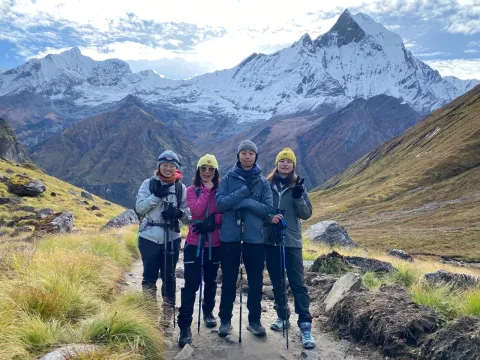
The 5 Days Annapurna Base Camp Shortest Trek is an ideal choice for travelers who want to experience one of Nepal’s most spectacular Himalayan adventures but have limited time. This fast-paced itinerary takes you from the beautiful lakeside city of Pokhara into the heart of the Annapurna Sanctuary, where you’ll stand beneath some of the world’s most impressive mountains at Annapurna Base Camp (4,130 m).Unlike the longer Annapurna Base Camp itineraries, this short version uses road transportation at the beginning and end of the trek and combines several trekking sections into longer walking days. The result is a compact adventure that allows you to experience dramatic Himalayan scenery, traditional Gurung villages, rhododendron forests, alpine landscapes, and the famous natural hot springs at Jhinu Danda within just five days.Although short in duration, this is not an easy trek. The itinerary involves several hours of walking each day and a relatively rapid gain in altitude. Good physical preparation, sensible pacing, and following your guide’s advice are therefore important for a safe and enjoyable experience.Why Choose the 5 Days Annapurna Base Camp Trek?The biggest advantage of the 5 Days Annapurna Base Camp Trek is its efficient use of time. Travelers who cannot spend one or two weeks trekking in Nepal can still experience the classic ABC route and reach 4,130 meters.The trek combines mountain adventure with cultural experiences. You’ll walk through traditional settlements, meet local people, cross mountain streams, pass through dense forests, and gradually enter the high-altitude Annapurna Sanctuary.It is particularly attractive to travelers already staying in Pokhara who want to maximize their time in the Himalayas without committing to a longer itinerary. The route is carefully structured to provide the essential ABC experience while minimizing unnecessary travel days.Annapurna Base Camp at 4,130 MetersThe ultimate destination is Annapurna Base Camp, situated at 4,130 meters above sea level. Reaching ABC is a special experience because the trail leads into a natural mountain amphitheater surrounded by enormous Himalayan peaks.From the base camp area, you can enjoy impressive views of Annapurna I, Annapurna South, Hiunchuli, Machhapuchhre, and other surrounding peaks. The scale of the mountains becomes particularly impressive as you stand directly within the Annapurna Sanctuary.For many trekkers, arriving at ABC after several days of walking is the emotional highlight of the journey. The combination of physical achievement and spectacular scenery makes the destination worth the effort.5 Days Annapurna Base Camp Trek RouteThe short ABC route begins in Pokhara, from where you drive toward Jhinu Danda. From there, you trek to Chhomrong, an important village on the Annapurna Base Camp trail.The route then continues from Chhomrong to Himalaya, passing through forests and settlements such as Sinuwa, Bamboo, and Dovan. From Himalaya, you trek toward Deurali and then continue through Machhapuchhre Base Camp before reaching Annapurna Base Camp.After spending time at ABC, the route descends through Deurali, Himalaya, Dovan, and Bamboo before continuing to Jhinu Danda. The final day combines trekking to Jhinu with a drive back to Pokhara.Day-by-Day Annapurna Base Camp Short Trek ExperienceThe first day begins with a scenic drive from Pokhara to Jhinu Danda followed by a short trek to Chhomrong at approximately 2,170 meters. This gives you a gentle introduction to the mountain environment.On Day 2, the trail becomes more demanding as you trek from Chhomrong to Himalaya at around 2,920 meters. You’ll walk through beautiful forests and pass several mountain settlements.Day 3 is the main highlight. From Himalaya, the trail continues through Deurali and Machhapuchhre Base Camp before reaching Annapurna Base Camp at 4,130 meters.On Day 4, you begin a long descent from ABC to Bamboo. The changing landscape is fascinating as the barren alpine environment gradually gives way to forests.The final day takes you from Bamboo to Jhinu Danda, where you can enjoy the natural hot springs before driving back to Pokhara.Trekking Through the Annapurna SanctuaryOne of the most beautiful aspects of the ABC trek is the variety of landscapes. The trail doesn't simply take you uphill; it passes through several distinct ecological zones.Lower sections feature lush forests filled with rhododendron, bamboo, oak, and other vegetation. As you climb higher, the trees become shorter and less dense. Eventually, the trail enters an alpine environment where massive mountains dominate the landscape.The Annapurna Sanctuary itself is particularly impressive. The surrounding peaks form a spectacular natural amphitheater, creating an unforgettable setting for Annapurna Base Camp.Chhomrong, Himalaya and DeuraliThe villages and stopping points along the route are an important part of the experience.Chhomrong is one of the largest settlements on the trail and provides excellent views of the surrounding mountains. From here, the trail continues deeper into the valley.Himalaya is located at approximately 2,920 meters and represents a significant step into the higher-altitude environment. The scenery becomes more rugged as you move toward Deurali.Deurali, at around 3,230 meters, is one of the final overnight stopping points before Machhapuchhre Base Camp and Annapurna Base Camp. The landscape around this section is dramatic, with steep cliffs, waterfalls, and mountain peaks.Machhapuchhre Base Camp and Mountain ViewsMachhapuchhre Base Camp, commonly known as MBC, is another major highlight of the trek. Located at approximately 3,700 meters, it provides incredible views of the distinctive Machhapuchhre, or Fishtail Mountain.The mountain is famous for its distinctive double summit and elegant shape. From MBC, the surrounding Himalayan landscape feels increasingly remote and dramatic.After a short rest at MBC, you continue toward Annapurna Base Camp. The final section opens into the Annapurna Sanctuary, where the mountains appear to rise dramatically around you.Sunrise at Annapurna Base CampIf weather conditions are favorable, waking early at Annapurna Base Camp is highly recommended. Sunrise can transform the surrounding mountains as the first light reaches the peaks.The early morning atmosphere is generally peaceful, and the combination of changing colors, snow-covered mountains, and clear Himalayan air creates a memorable experience.Because the weather can change quickly in the mountains, sunrise views are never guaranteed. However, when conditions are clear, this can become one of the most memorable moments of your Nepal trip.Jhinu Danda Hot SpringsAfter reaching Annapurna Base Camp, the trek becomes a descent toward lower elevations. One of the highlights of the return journey is Jhinu Danda.Jhinu is well known for its natural hot springs, which are located a short walk from the village. After several demanding days of trekking, soaking in the warm water can be a relaxing way to rest your tired legs.The hot springs also provide a pleasant contrast to the cold alpine environment experienced earlier in the trek. After enjoying Jhinu, you continue by road toward Pokhara.Best Time for Annapurna Base Camp Short TrekThe best seasons for the Annapurna Base Camp Short Trek are generally spring and autumn.March to May brings pleasant trekking conditions, blooming rhododendrons, and generally good mountain views. Autumn, particularly September to November, is another excellent period, with relatively stable weather and clear mountain scenery.Winter trekking is possible but can be much colder at higher elevations, and snow may affect sections of the trail. The monsoon months of June to August bring more rainfall, slippery trails, clouds, and potentially difficult road conditions.Regardless of the season, mountain weather can change quickly, so proper clothing and flexible planning are essential.Difficulty and Physical PreparationThe 5-day ABC trek is considered a challenging trek because the itinerary compresses a longer Himalayan journey into a short period.You should be comfortable walking for approximately six to seven hours on several consecutive days. The trail includes steep stone steps, uphill sections, downhill sections, uneven terrain, and high-altitude walking.Before the trek, regular walking, hiking, stair climbing, and cardiovascular exercise can help improve your endurance. Training on consecutive days is particularly useful because it prepares your legs for repeated trekking days.You don't need to be an elite athlete, but you should arrive physically prepared and ready for a demanding adventure.Altitude and Safety on the Short ABC TrekAltitude is one of the most important considerations on this itinerary. The trek climbs from the lower valleys to 4,130 meters at Annapurna Base Camp within a few days.Your guide will monitor your condition throughout the trek. Walking slowly, staying hydrated, eating properly, and allowing your body to adjust are important.If you experience symptoms such as persistent headache, dizziness, nausea, unusual fatigue, or difficulty breathing, tell your guide immediately. Altitude-related symptoms should never be ignored.The itinerary may need to be adjusted if weather, trail conditions, or a trekker's health makes the planned schedule unsafe.Accommodation and Food During the TrekAccommodation on the 5 Days Annapurna Base Camp Trek is generally provided in local teahouses and mountain lodges.The rooms are simple and usually include beds and basic bedding. Bathrooms may be shared, particularly at higher elevations. Facilities become increasingly basic as you move farther into the mountains.Meals are generally available at the teahouses, with options such as dal bhat, noodles, rice, pasta, soup, potatoes, eggs, bread, pancakes, and momos. Hot tea and other drinks are also commonly available.Dal bhat is a popular choice because it provides a filling and nutritious meal for long trekking days.Guides, Permits and Trekking SupportA knowledgeable trekking guide is highly recommended for this short itinerary. Because the schedule is tight, having a guide helps with navigation, accommodation arrangements, transportation, local trail information, and altitude awareness.The trek also requires the appropriate permits and documentation for the Annapurna region. Current permit requirements should be confirmed before departure because regulations can change.A professional trekking operator can arrange permits, transportation, accommodation, guides, and other logistics so you can concentrate on enjoying the journey.Why the Shortest ABC Trek Is Worth ItThe 5 Days Annapurna Base Camp Shortest Trek is an excellent option for travelers who want maximum Himalayan experience in minimum time.It brings together many of Nepal's most memorable trekking experiences: walking through rhododendron forests, visiting Gurung villages, crossing mountain landscapes, watching the Himalayas change with altitude, reaching Machhapuchhre Base Camp, standing at Annapurna Base Camp, and relaxing at the Jhinu hot springs.It is a demanding journey, but that challenge is part of what makes it rewarding. With proper preparation, a sensible pace, a reliable guide, and suitable equipment, five days is enough to create an unforgettable Annapurna adventure.For travelers with limited time who still want to experience the heart of the Annapurna region, this short itinerary offers an exciting and efficient way to reach one of Nepal's most iconic Himalayan destinations.